Jump to:
-
Breakfast of champions
-
A deep dive into Maldivian cuisine
-
Eat well, feel good
-
Food in the Maldives: king coconut
-
Feasting island-style
-
Maldives in the spotlight
-
FAQ
While little known outside the country, food in the Maldives can more than hold its own when it comes to offering a flavourful, well-balanced diet. As befits an island nation, Maldivian cuisine primarily relies on fresh, locally sourced ingredients, although locals do have access to global fast-food franchises should they want a break from their healthy diet.
As holidaymakers become more adventurous, giving their palate regular workouts outside of international fine dining restaurants, local chefs are stepping up. From themed nights to cooking classes, there are countless ways to embrace local eating habits and fall for island flavours head over flippers.
Breakfast of champions
For many visitors, their first introduction to food in the Maldives happens at breakfast. With toes buried deep in powder-soft sand, the eye wanders to the local specialties section of the buffet. If you are lucky, the selection reveals not just excellent papaya and bananas, but a variety of complex dishes fine-tuned by generations of cooks to make the most of readily available ingredients.
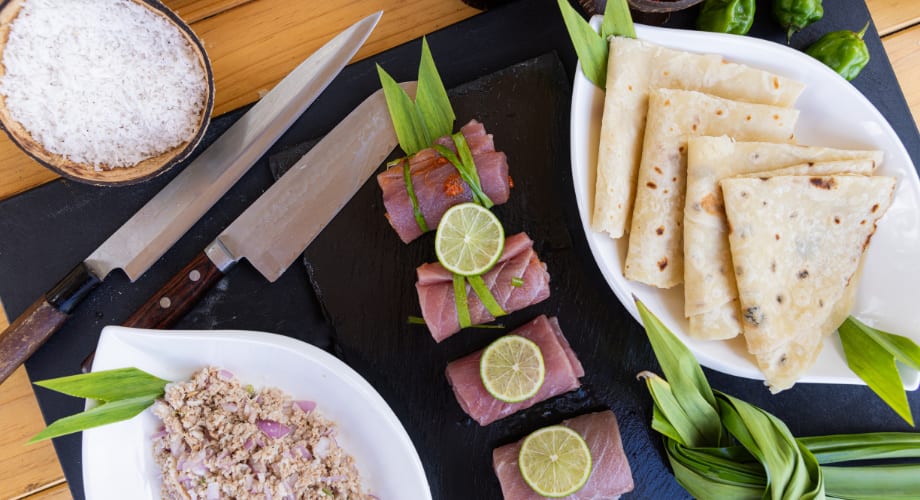
Take mas huni – a savoury, slightly tangy mixture of shredded smoked tuna, freshly grated coconut, finely chopped onions and a squeeze of lime. Filling and delicious, it's not hard to see why no local breakfast spread is complete without it.
While mas huni is the classic option, other morning staples include garudhiya, a light fish soup served with rice and lime; vegetarian-friendly boshi mashuni made with banana flowers instead of tuna; and the colourful baraboa mashuni salad starring local pumpkin and grated coconut.
Top them with fresh chilli and wash it all down with sweetened black tea, known as sai, and your affection for eggs Benedict will be a distant memory.
A deep dive into Maldivian cuisine
With the average tourist staying at their Maldivian resort for a full eight days, opportunities abound to not only explore the country’s underwater treasures but also sink your teeth into its culture. Food provides a natural way in.
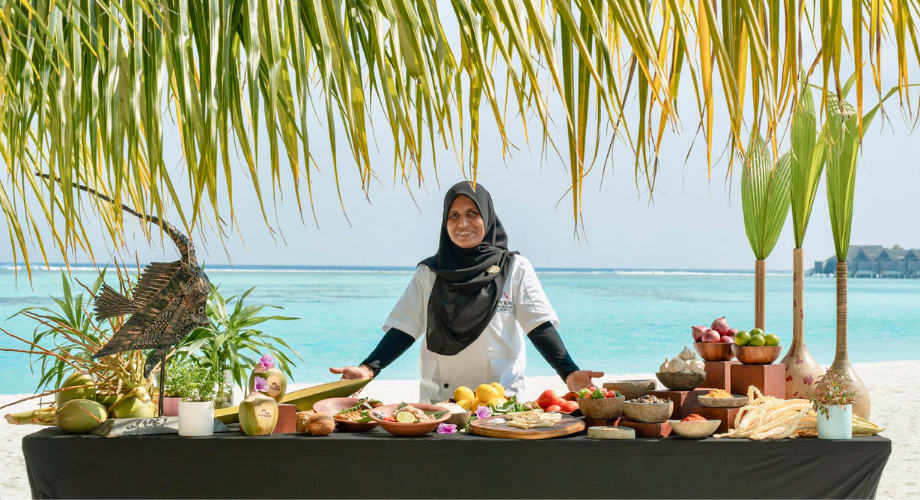
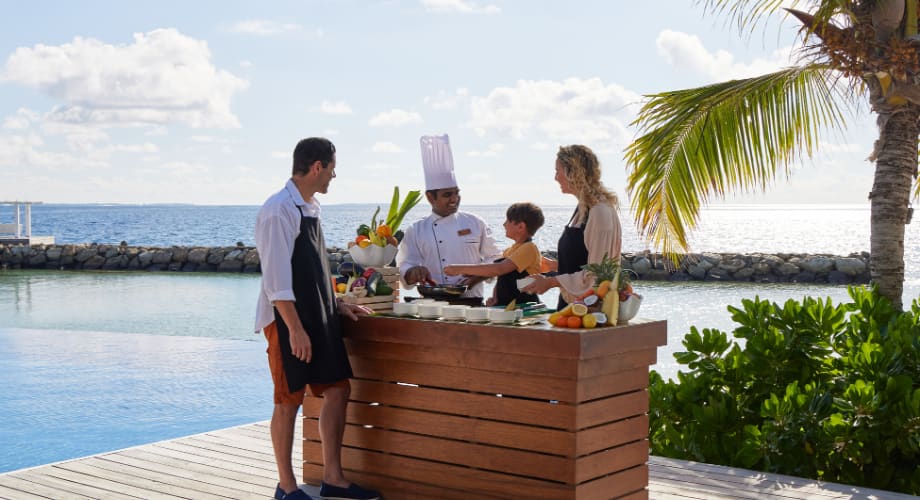
At Anantara Dhigu Maldives Resort, Fushi Café is putting a spotlight on Maldivian food and culture as part of its weekly Maldivian Friday Night. Picture a generous buffet spread of local favourites and traditional Boduberu music, with energetic drummers and dancers spicing things up. While at Niyama Private Islands, Chef Mariyam Reema embodies the Maldivian culinary heritage. As the resort's first female team member, she leads the FoodPlay Interactive Cooking Class, where guests immerse themselves in Maldivian cuisine from mastering Mashuni to crafting fragrant curries.
Over at Maala Maldivian Café, a cosy spot for alfresco cooking classes, native chefs at NH Maldives Kuda Rah Resort will guide you through the steps of picking the best ingredients and creating aromatic curries and other traditional dishes. For overachievers among you, Anantara Veli Maldives combines Thai and Maldivian dishes in its signature Spice Spoons cooking class, offering a chance to learn everything from tom yum goong to local tuna curry and coconut crème brûlée.
Eat well, feel good
The most obvious attraction of Dhivehi cuisine, as Maldivian cooking is known, is the emphasis it places on fresh, seasonal ingredients and traditional cooking methods such as steaming, boiling and grilling. As a result, food is served at its nutritional peak, making Maldivian cuisine a great choice for health-conscious travellers who find the occasional blandness of wellness menus off putting.
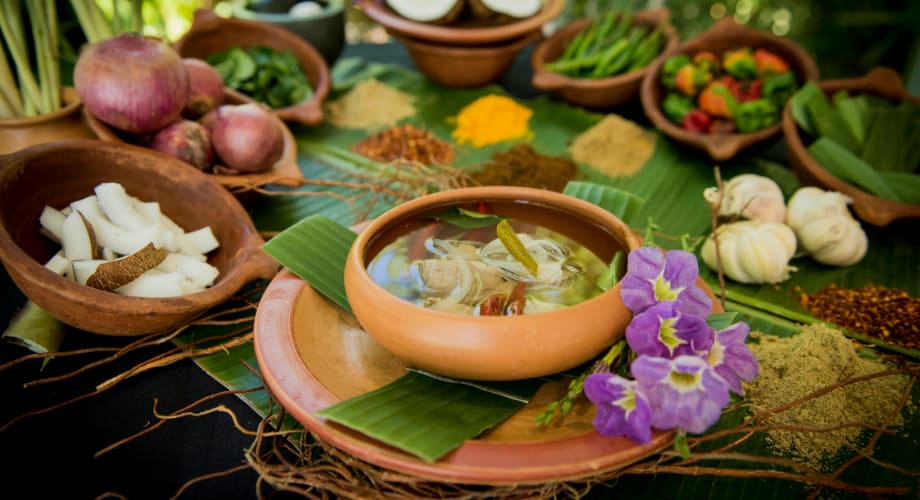
With only three key ingredients on daily rotation – coconuts, fish and some kind of starch – local chefs rely heavily on a rainbow of spices to elevate the flavours. Found in every household, pantry staples such as turmeric, chilli, cinnamon and cardamom reflect the culinary influences of neighbouring India and Sri Lanka, as well as ancient trade routes that connected through the Indian Ocean archipelago.
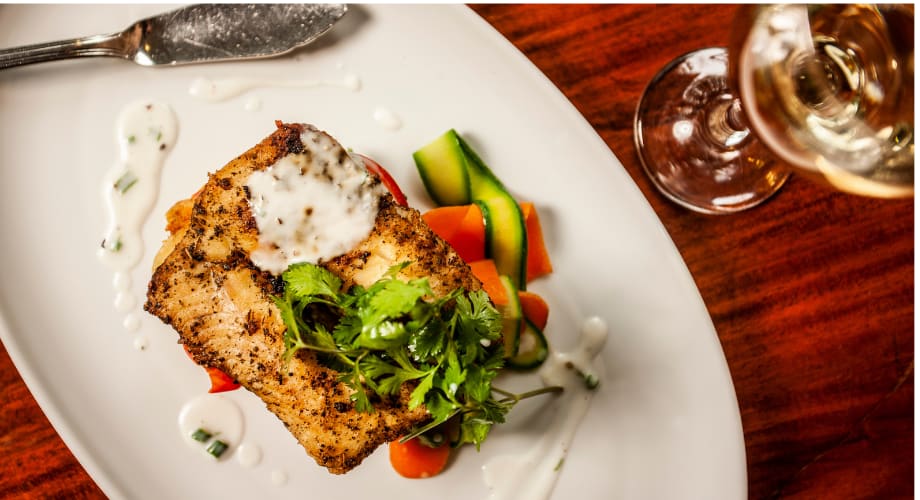
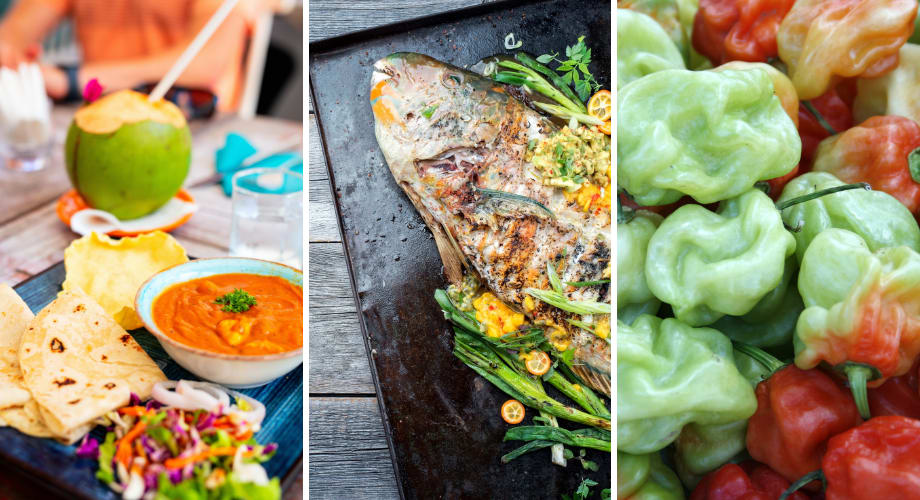
Other distinctive ingredients include pandan and curry leaves, plus garlic and ginger. As for the daily catch, popular fish varieties beyond tuna include mahi-mahi, wahoo, grouper and snapper.
Interestingly, popular dishes vary across the archipelago, showcasing distinct regional characteristics. In the southern atolls, influences from neighboring lands like Sri Lanka and the Indian subcontinent bring spicier dishes and a wider array of ingredients. The central atolls, home to the capital city of Malé, blend traditional flavours with global influences, reflecting the area's diverse population. Meanwhile, in the northern atolls, the focus shifts to local fish, coconuts and tropical fruits, celebrating the region's natural abundance.
Food in the Maldives: king coconut
While the nation thrives on the bounty of the ocean, it’s the coconut that does the heavy lifting.
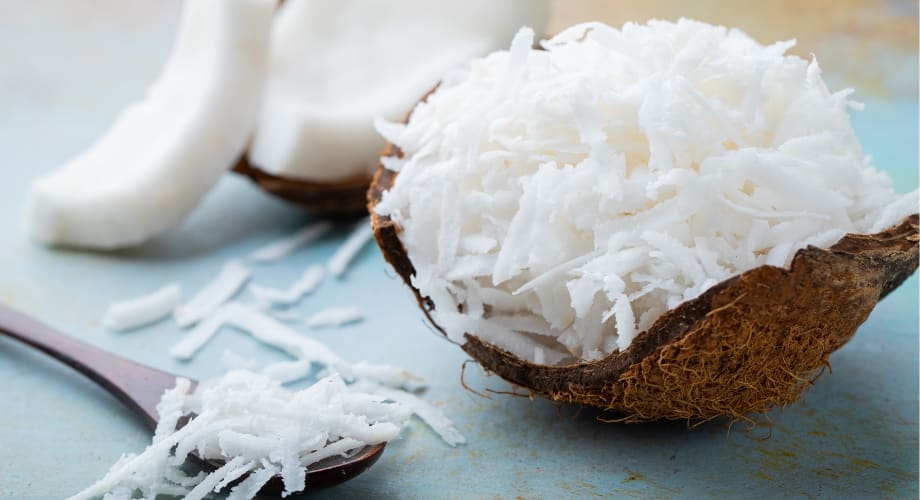
Plentiful and affordable, coconuts are used in Maldivian cuisine in various forms – grated, as milk, or as oil. Each stage and variety of coconut serves a purpose, from refreshing drinks to essential ingredients in traditional dishes. The coconut palm, often called the "Tree of Life," is also the national tree of the Maldives and is deeply embedded in the local way of life.
The type of coconut palm commonly found in the Maldives is Fadihi Ruh. It is particularly valued for its tender fruits, which have a grayish-green outer colour and are often preferred for their water. Adding to the diversity of the local landscape are other, less common varieties like Nulu Ruh (with green coconuts), Kuhi Ruh (bearing both green and red coconuts), Rathu Ruh with its striking red coconuts and the shorter palms like Jaafaanu Ruh and Danbu Ruh.
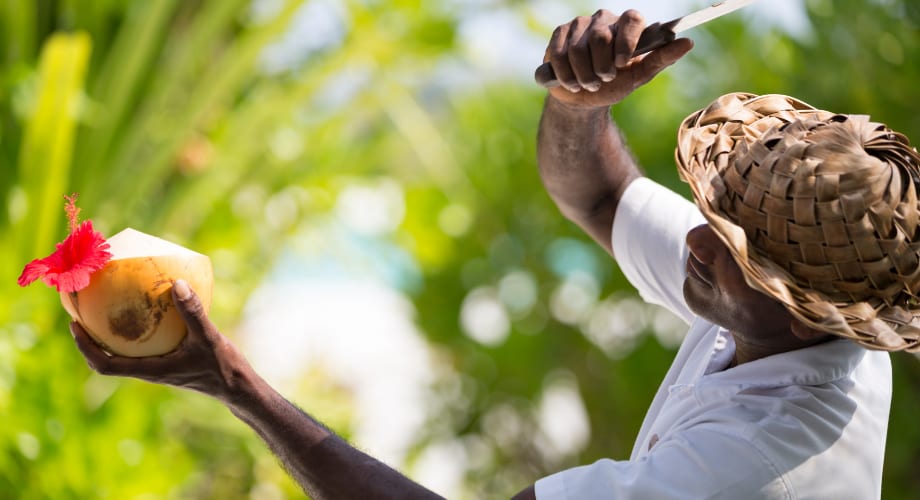
The extraordinary versatility of coconut is only matched by the creativity of local chefs, who find use for every stage of the plant, including the flower, which is harvested for its delicious sap to make a traditional sweetener called coconut honey. The green coconut, known as kurumba, is celebrated for its mildly sweet water, while the soft, jelly-like flesh is a popular snack.
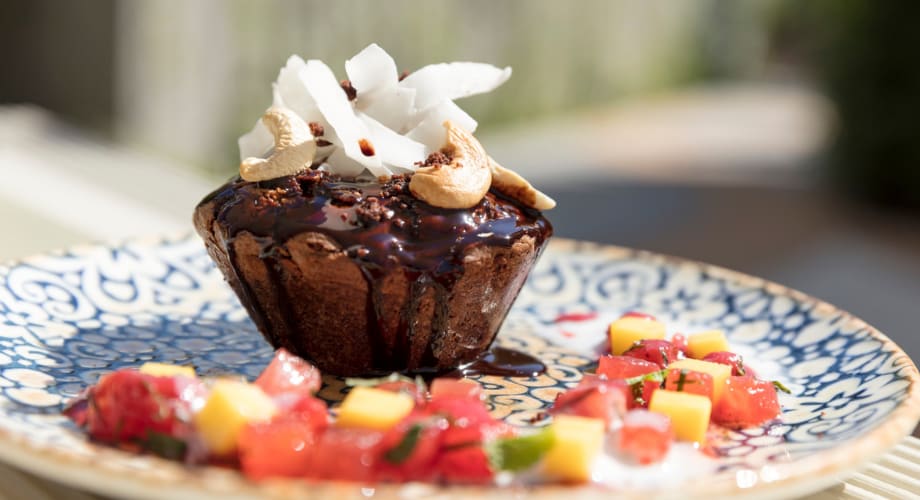
As the coconut matures, the flesh becomes thicker and meatier, much of it ending up in baked desserts or mixed with smoked tuna and spices. Finally, the fully ripened coconut is grated for salads and its coconut milk is added to curries and desserts.
Everything down to the husk is used in some practical way. The fibers from the coconut husk, known as coir, are extracted and used to make ropes, mats, brushes and highly effective brooms. Not to mention the various handicrafts made by local artists, including decorative items, baskets and other traditional products. When shredded, the husk can be used as mulch in gardens to retain moisture and improve soil quality or added to compost to enhance its nutrient content.
Feasting island-style
Enjoying food in the Maldives is as much about the experience as it is about the food. In local homes, traditionally meals are enjoyed on low cushions or mats placed on the floor, fostering a sense of community and connection.
Late afternoons are often reserved for a tea break shared with friends and family. Less formal than the English tradition, the experience nonetheless has traditional elements such as sweetened black tea and a variety of snacks and short eats known as hedhikaa. Sweet treats like bondi bai (sweet rice cakes) and huni hakuru folhi (coconut and sugar-filled pancakes) are also popular.
More formal are family gatherings during the Eid al-Fitr celebrations that mark the end of Ramadan. Families gather over rich curries such as kandu kukulhu and dhon anbu riha, and various other savoury dishes like rihaakuru (concentrated fish paste); coconut and tuna mashuni; the ubiquitous huni mas; and mas fen (dried fish) – all served alongside coconut rice, papadum or chapatti, and a variety of traditional side dishes.
Desserts also play an important role, with favourites like foni boakibaa (sweet rice cake) and saagu bondibai (sago pudding). The Maldivian feasts are a time for joyous celebration, sharing and reinforcing familial bonds.
A particular festive table favourite of Chef Reema from Niyama Private Islands is hanaa kuri mas made with mackerel or frigate tuna instead of reef fish, reinventing the timeless classic with contemporary techniques while preserving traditional flavours.
More tantalising local dishes await at Plates, the charming open-air restaurant at Anantara Kihavah, at Anantara Dhigu’s weekly Maldivian Friday Night hosted by Fushi Café, and at Avani+ Fares Maldives Resort where chefs often cook using wana mola (a traditional grinding stone and pin) to blend spices into the perfect medley of taste, texture and aroma. By prioritising natural flavour enhancers, chefs let the organic, locally and sustainably sourced ingredients shine.
Maldives in the spotlight
As the Maldivian culinary scene continues to grow, there are more opportunities for local food to break onto the global stage. Michelin-starred luminaries as Chef Mark Donald from Scotland, master of Cantonese cuisine Melvin Chou, and Denis Lucchi, a maestro of Italian cuisine, will be making full use of pristine native ingredients (while working on their tan, no doubt) to elevate local food as part of the popular chef-in-residence series by Anantara Kihavah Maldives Villas.
Feeling hungry yet?
Plan your next holiday around exploring Maldivian cuisine and leave with memories as rich as the food itself. For inspiration, visit Minor Resorts in the Maldives.