Jump to:
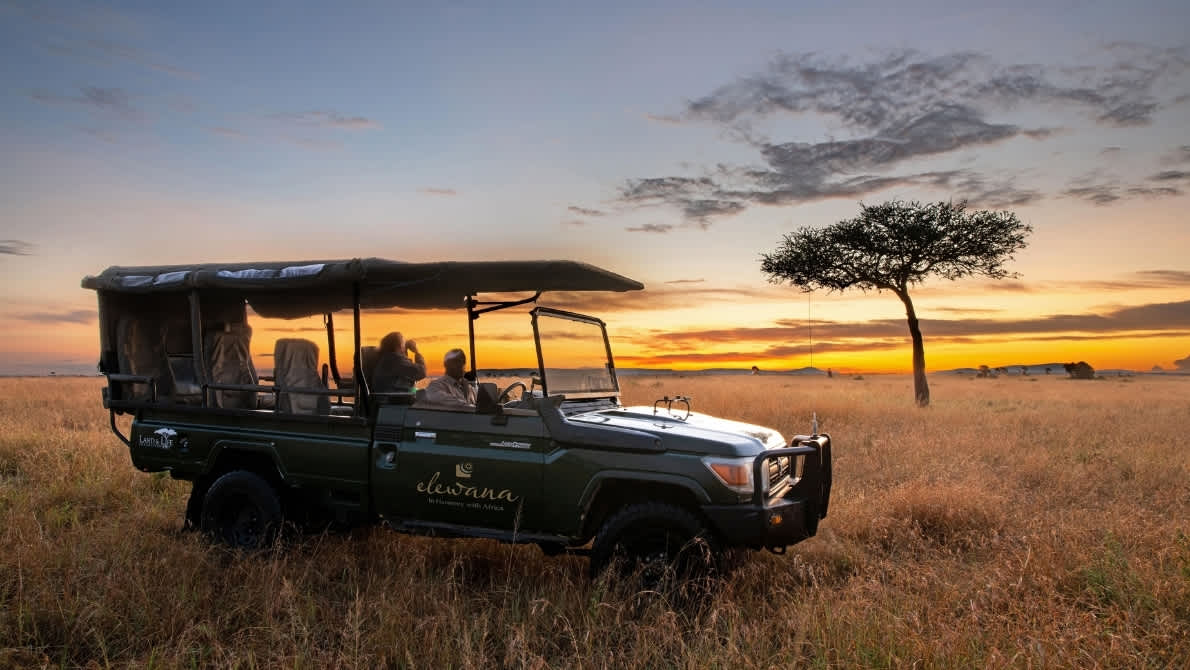
The jeeps slowly stop on the path and drivers cut the engines, bringing silence to the trail. As guides set the scene, anticipation fills the air as everyone scans the savannah to find the true inhabitants of this land. “Safari” is the Swahili word for journey and Kenya’s national parks and conservancies, among the first established in Africa, helped spread this word worldwide.
Today, the conservation efforts made in Masai Mara, Amboseli, Laikipia and other spaces are protecting the ecosystems and animals living in Kenya while safaris are funding their efforts to do so. Kenya has more to offer than most safaris cover on a single trip so it's important to know more about each animal and where the best place is to encounter them, particularly when exploring Kenyan safari animals.
Meet your guide
Alina Haq, the safari storyteller
Alina Haq, Director of Marketing & Communications at Elewana Collection, brings a deep understanding of East Africa’s landscapes, wildlife, and the stories that shape them. Having spent years immersed in Kenya and Tanzania’s most iconic safari regions, she shares her perspective on the animals that define the Kenyan safari experience, and where to encounter them at their most extraordinary.
Lion
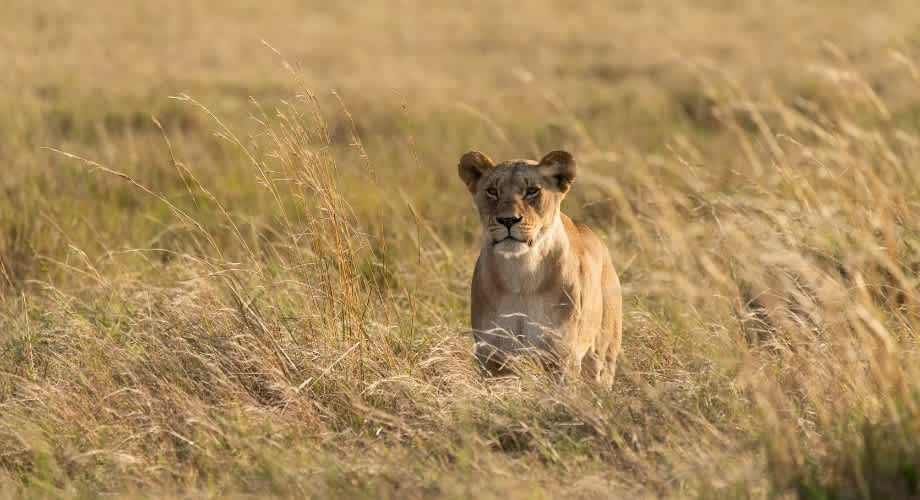
The king of the jungle is one of the defining symbols of the Kenyan safari and Masai Mara is where you can see lions in their natural setting. According to Alina, lion prides are seen here resting under acacia trees during hot daytime conditions and they become more active in the evenings especially when the sun begins to set.
Between July and October, wildebeest herds cross Tanzania into Kenya passing through the Mara in an annual event called the Great Migration. Lion activity greatly intensifies during this period as large prides start tracking herds across the open grasslands.
Alina notes that lion sightings become more dynamic during this time as you can see multiple prides engage in large-scale hunts simultaneously, giving you more chances to see them in action. The best place to start your lion safaris is in Masai Mara, where the Elewana Sand River Masai Mara is well positioned within the National Reserve close to the Tanzania border. For a more exclusive look at the lions, try the Elewana Elephant Pepper Camp in the Mara North Conservancy, especially for night game drives that are not permitted inside the Reserve.
Elephant
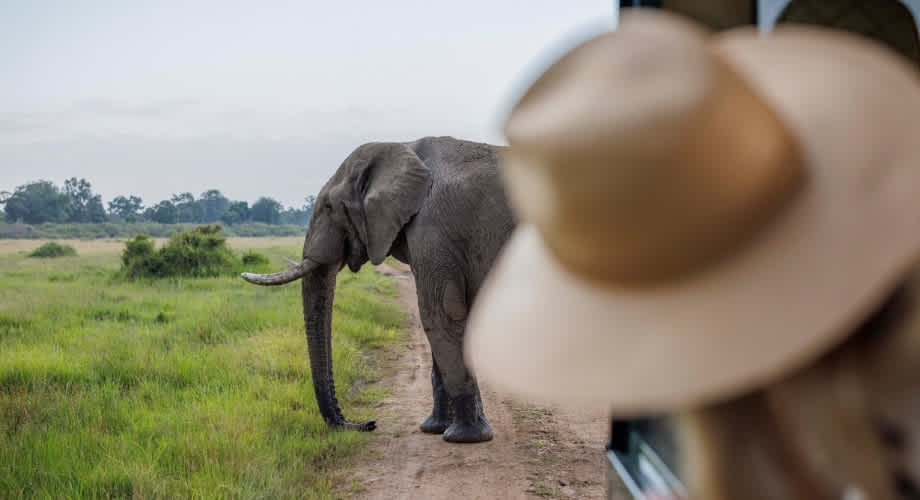
African elephants are best encountered in Amboseli National Park, where they freely roam the plains in large herds. These elephants are some of the most photographed in the world especially with Mount Kilimanjaro rising up in the background behind them.
Amboseli’s elephants are studied often by scientists so they are more familiar with vehicles. The combination of their relaxed nature and large, open terrain, leads to unhurried visits and rewarding elephant encounters. Alina says that this kind of encounter is extremely memorable as you get more time with the elephants.
You can start your elephant safari from Elewana Tortilis Camp Amboseli, which sits in a private conservancy that borders the national park. The camp is powered entirely by solar energy and offers guides and game drives that you won’t experience in the national park. The guides are accredited by the Kenya Professional Safari Guides Association and they know individual elephants and their relationships with each other. They will share these observations with you, enriching the entire experience.
Leopard
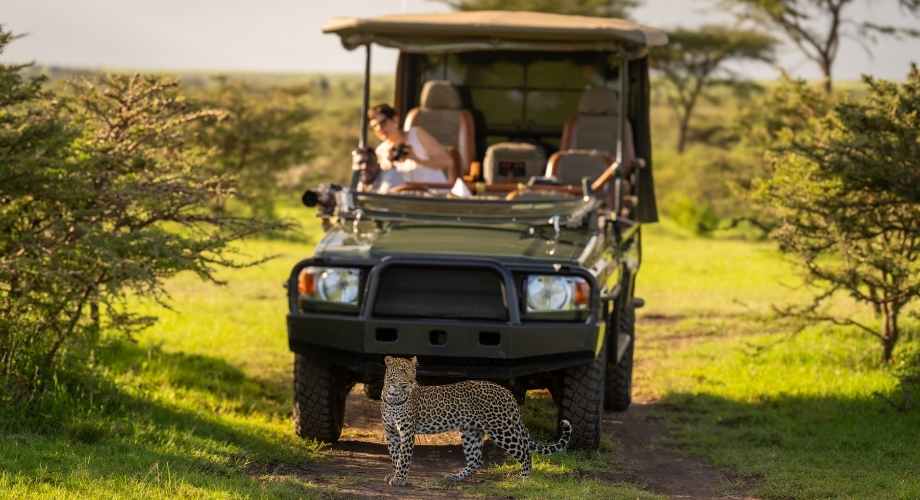
One of the most elusive animals on this list is the leopard and it’s for this same reason that spotting one in the wild is a magical experience among Kenya’s safari animals. Alina describes leopards as solitary creatures that like to stay hidden as much as possible and they are most active at dusk and dawn. You might see them lying atop a tree branch or moving silently through tall grass.
Leopard encounters in Kenya occur in two distinct landscapes. In Masai Mara, they are found in the same ecosystem as lions and cheetahs spending most of their time between the riverine forests and the rocky outcrops before the open plains truly begin. They are also found in Laikipia but the terrain here is more varied and remote. There are fewer vehicles passing through the area so the leopard sightings seem more intimate.
The Elewana Elephant Pepper Camp in Mara North Conservancy is a great choice for leopard encounters as they offer evening and night game drives. In Laikipia, the Elewana Loisaba Tented Camp sits high up giving you a panoramic view of Mount Kenya and a chance to seek out leopards in a quieter setting.
Cheetah
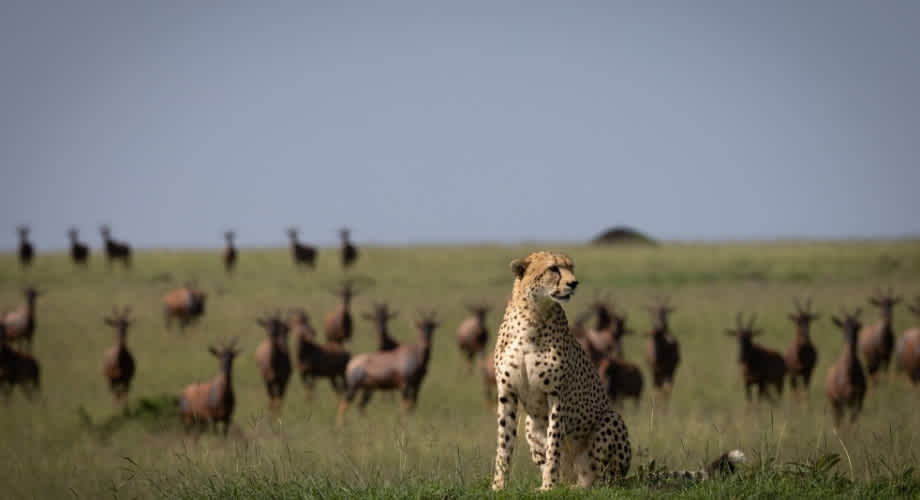
If finding a leopard on safari is about patience and keen observation, finding a cheetah is all about timing. The open savannahs of Masai Mara are where cheetahs are best encountered. Flat unobstructed grassland is the exact terrain that cheetahs need to reach top speed and catch their prey at a full sprint.
Getting into position for an uninterrupted view of the entire hunting process is the key here as it starts with the cheetah stalking their prey. Once they are in position, you have to keep an eye on them as they will explosively burst into a pursuit and within seconds grab their prey. These few seconds are all you get to see one of nature’s most exciting chases.
Thankfully, cheetahs are active during daylight hours so it’s much easier to plan safaris to spot them. Alina recommends staying at Elewana Sand River Masai Mara as this resort has excellent access to the Mara’s open terrain. The National Reserve here is one of Kenya’s main big cat destinations so you could encounter lions and cheetahs on the same safari, highlighting the diversity of Kenya safari animals found within a single ecosystem.
Black Rhino
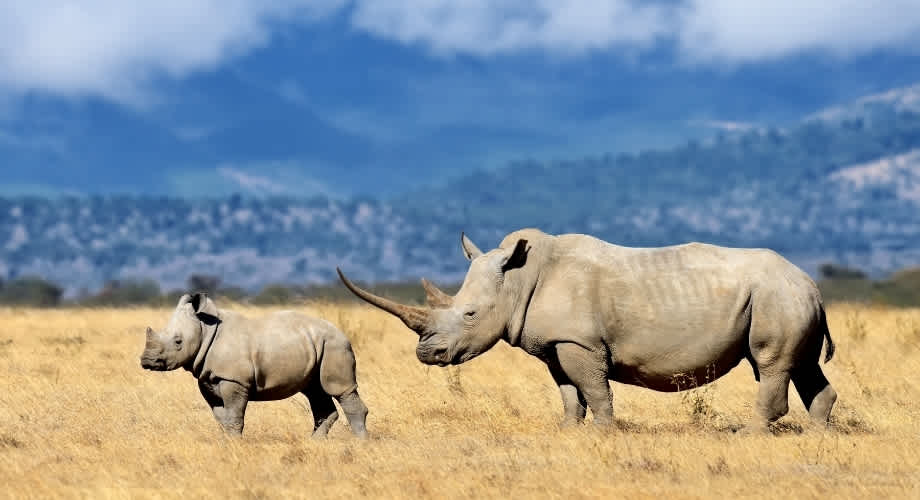
The black rhino is a complex wildlife encounter on Kenyan safari because of the immense significance that human behaviour has had on this particular animal. For many decades, black rhinos were poached for their horns and they were almost hunted to extinction. However, it is human intervention that has contributed to their resurgence and that comes down to conservancy efforts that are expensive and highly protective.
The Lewa Wildlife Conservancy accurately depicts this as hundreds of rangers patrol the 65,000-acre fenced landscape conducting anti-poaching operations while dedicated staff carry out habitat management and breeding programs. However, funding these conservancy efforts through tourism is currently the best way to help ensure the safety of the black rhino.
Staying at the Elewana Lewa Safari Camp and Elewana Kifaru House give you direct access to black rhinos. The Lewa Safari Camp is owned by the conservancy directly so revenue from the camp directly funds the protection of all wildlife within the area. Elewana Kifaru House is a more exclusive property with only 5 luxury cottages as well as expert private guides and full conservancy access. ‘Kifaru’ means rhino in Swahili and the rhino is definitely the focus for visitors here.
Wildebeest
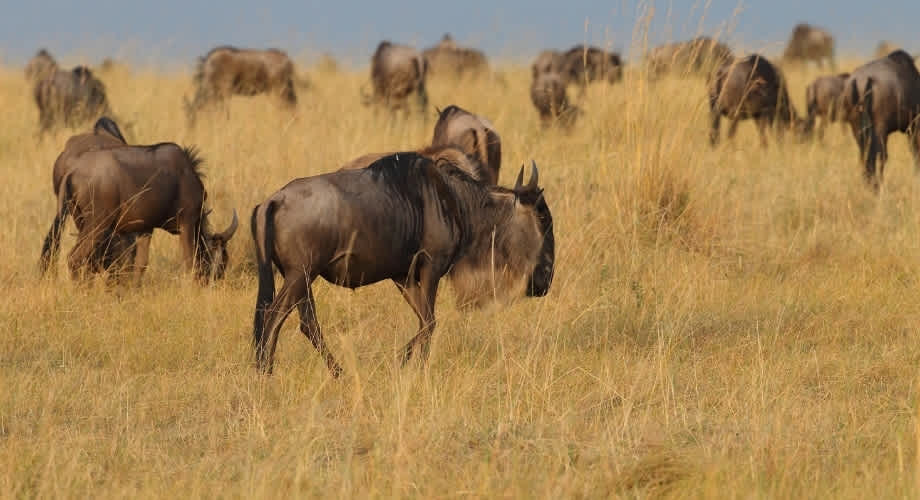
The Great Migration is one of the most incredible natural spectacles in the world with millions of animals continuously moving from the Serengeti in Tanzania to the Masai Mara in Kenya and back again. For the Kenyan safari calendar, the time period between July and October is most significant as the Great Migration passes through Kenya as massive herds of animals deliver the most exciting safari experience.
The wildebeest are the engine driving this migration as over a million of them form the core of the migrating animals. The Mara River crossings are where the most action occurs as they tentatively gather at the banks of the river before plunging into the fast-moving water only to be assailed by Nile crocodiles. Once they get out of the water, lions, cheetahs and hyenas are waiting for them.
The entire ecosystem rearranges around the movement of the wildebeest as they keep going forward even birthing offspring on the move. The timing of your safari is crucial here as the crossings are unpredictable since many herds can get across in one day or there’s no movement on another day. The Elewana Sand River Masai Mara sits directly on the migration route giving you intimate access to this event.
Giraffe
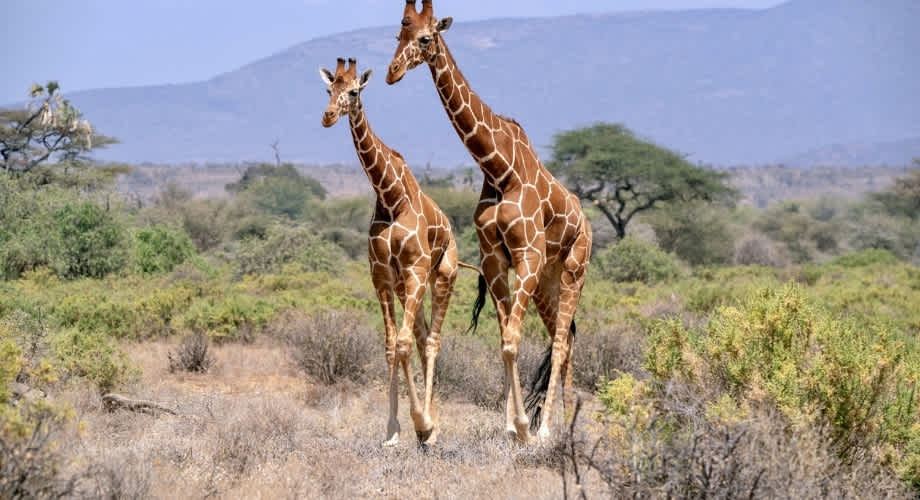
As one of the most recognisable animals in Kenya, the giraffe is found across the country’s parks and conservancies. Alina suggests looking for them in north Laikipia as this is where the reticulated giraffe resides. This subspecies is known for its bold and sharply defined coat pattern that sets it apart from the softer patterns from the giraffes to the south.
Encountering the reticulated giraffe is rarer but Laikipia’s open landscape, with wide horizons, high viewpoints and plenty of acacia trees, is the ideal place to find them.
Guests at the Elewana Loisaba Tented Camp have better access to the reticulated giraffes as they are actively monitored and protected in this region. The Loisaba Conservancy is possibly the best place to find reticulated giraffes in larger groups. However, giraffes simply love eating acacia leaves so there’s a chance you’ll see them on many safaris in Kenya.
Grevy’s zebra
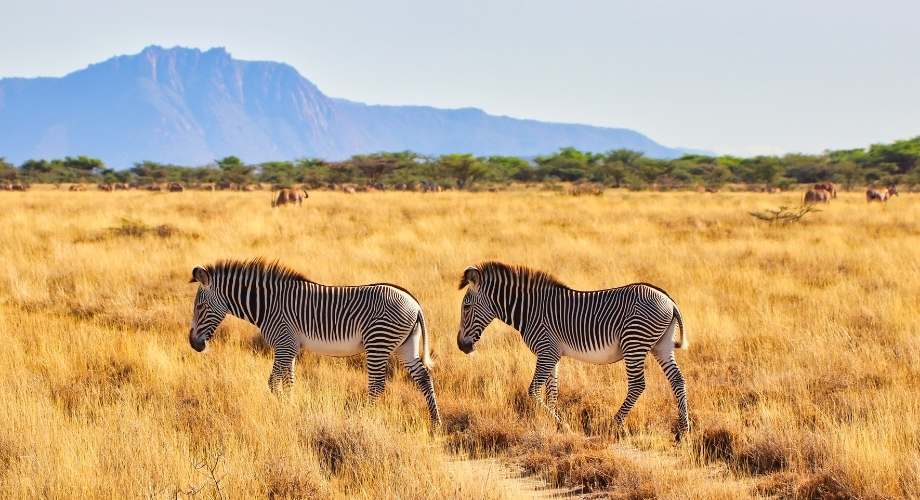
What most people don’t know is that Kenya has two species of zebra and differences between them are quite pronounced. The plains zebra is found commonly across the Masai Mara but the Grevy’s zebra is rare and you’ll know it as soon as you see it. They are larger than plains zebras with more dense and tightly packed stripes. They also have distinctly large and rounded ears, which is one of the main visual features that differentiate them from the plains zebra.
The Grevy’s zebra is most often found in the Lewa-Laikipia region and they are also a part of the conservation efforts here. These zebras were genuinely under threat and they are still under pressure as their numbers have declined over the past century to only a few thousand.
Sighting a Grevy’s zebra is noteworthy and the most reliable place to find them is in the Loisaba Conservancy. That’s why you can choose between the daily game drives at the Elewana Loisaba Tented Camp and their or the unique outdoor accommodation at the Elewana Loisaba Star Beds to observe the Grevy’s zebra in its natural habitat.
African buffalo
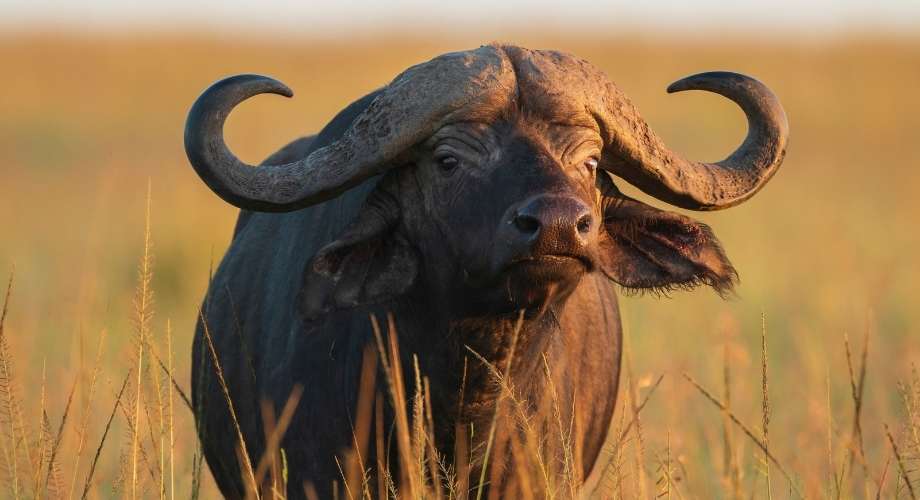
The African buffalo is not the most celebrated animal for many safari-goers but it commands respect through its sheer presence. It is one of the most widely distributed large mammals in the country as it is found across the Masai Mara, Laikipia, Amboseli and many more places. The buffaloes move in big herds, sometimes numbering in the hundreds, changing the landscape as they traverse through it.
Unlike the patience required to find specific animals such as lions, leopards and rhinos, the African buffalo is easily encountered and always worth watching. If you see them up close, you’ll note that they are not passive creatures and their remarkable size and strong temperament are not to be taken lightly.
While it is easy to find them anywhere across Kenya on safari, watching a herd move through the plains at dusk is a powerful scene as the dust floats up into the air adding to the colours in the sky.
African wild dog
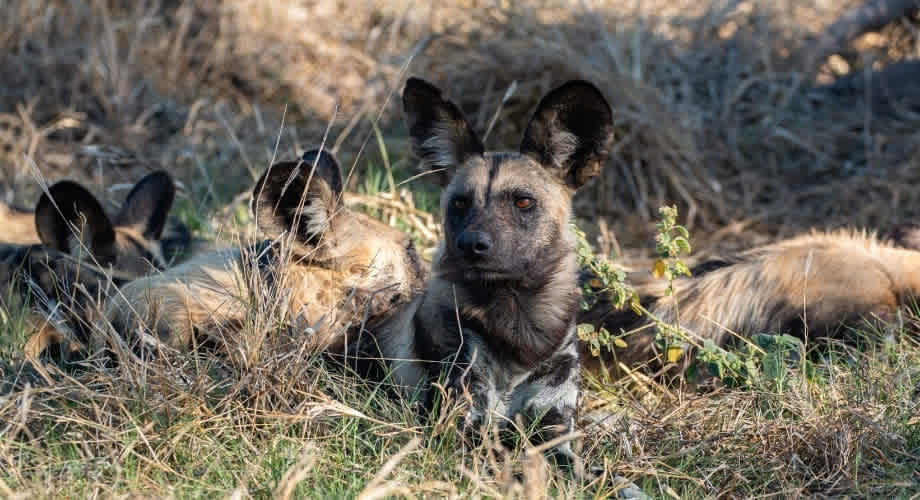
The African wild dog has disappeared from most of its natural range and it has become one of the continent's most endangered predators. A sighting anywhere in Africa is rare at this point but Alina notes that Laikipia is one of the last genuine homes for these animals as these large corridors are actively conserved through a network of private conservancies.
The African wild dog is a pack hunter and they operate with precision and fluidity, moving quickly to stalk, hunt and kill their prey. Watching them move together is unlike any other predator encounter on safari but finding them is a real challenge.
Laikipia’s conservancy model covers connected landscapes, which makes sightings of African wild dog packs possible. The Loisaba Conservancy is your best bet to get a chance to see these elusive hunters but unlike the giraffe, Grevy’s zebra or even the leopard, you’ll have to get lucky to encounter a pack.