Popular Balinese Food: What to Eat and Where
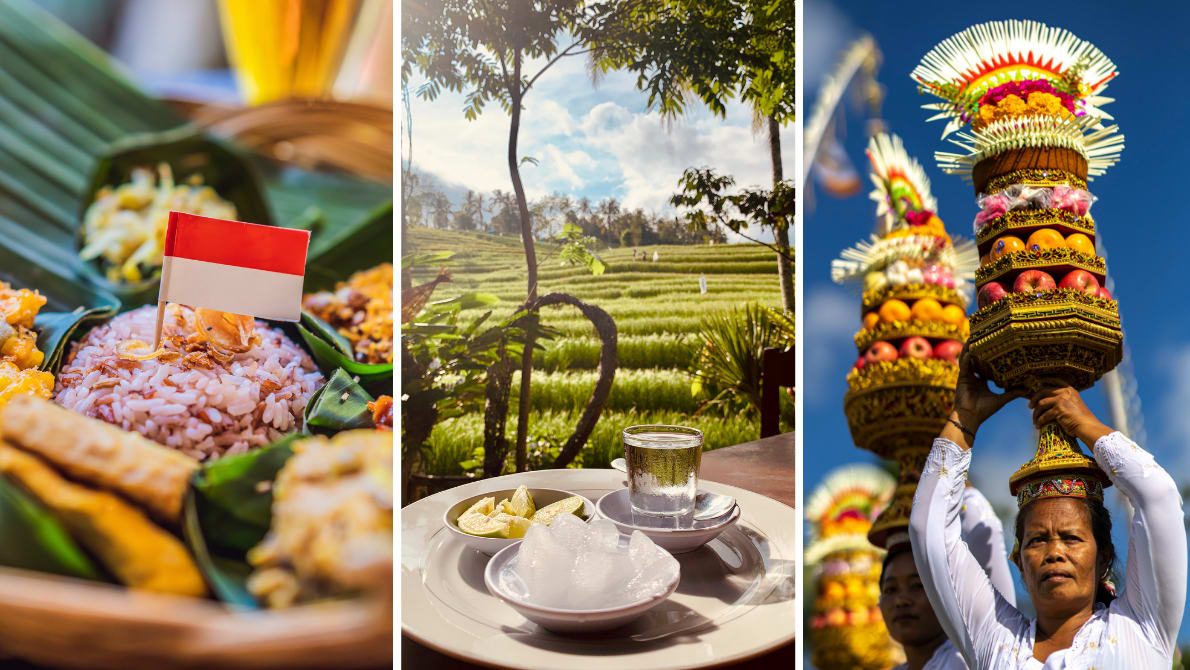
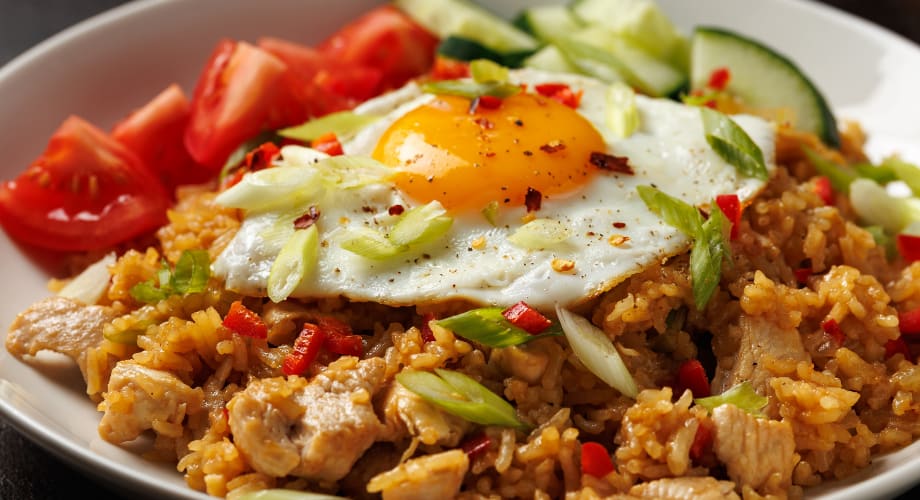
As in many parts of Indonesia, Balinese cuisine stands out for its bold flavours and vibrant ingredients. Bali’s most popular foods include nasi goreng (fried rice), babi guling (spit-roasted pork), satay, nasi campur (mixed rice), sambal and gado-gado (vegetable salad with peanut sauce). These dishes are staples across the island, served in everything from humble warungs to upscale restaurants, offering visitors an authentic taste of Balinese culture.
But despite its postcard-perfect sunsets and reputation as a spiritual hideaway for surfers, slow-lifers and digital nomads, Bali still hasn’t claimed its rightful throne in Southeast Asia’s culinary court. Thai food is universally adored. Vietnamese is clean, complex and everywhere. Filipino cuisine is gaining ground but still subject to debate.
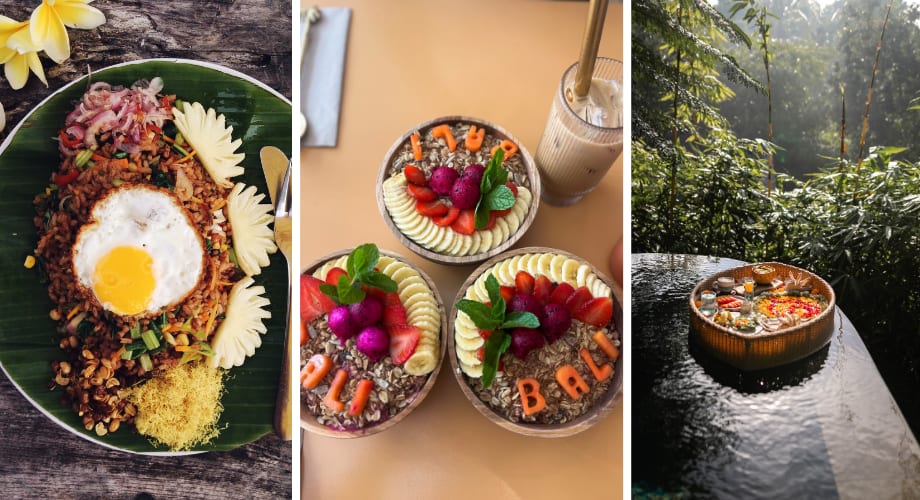
And yet regionally popular Balinese food, arguably one of the most soul-stirring and ceremonially rich cuisines, remains relatively obscure outside of Asia (with the notable exception of the floating breakfast trend that is widely believed to have started here). It’s not for lack of trying.
Breakfast in Bali
In the past two decades, Ubud and Seminyak have seen an influx of upscale dining spots helmed by big-name chefs, slick interiors and organic farm-to-plate philosophies. But while these restaurants have elevated ingredients and amplified aesthetic, they’ve rarely succeeded in bringing local, everyday Balinese dishes into global consciousness.
The reason? Possibly because Balinese food isn't built for stardom or Instagram likes. It’s ceremonial, spiritual, layered and complex. Like the island itself.
Jump to:
Meet the expert: Filania Tangel
To navigate the fragrant labyrinth of Balinese food culture, we’ve enlisted the expertise of Filania Tangel, Cluster Manager of Ecommerce and Sales for Minor Hotels in Bali. A trusted insider with deep roots in the local hospitality scene, Filania is just as passionate about sambal as she is about service excellence – and she’s got the tastebuds to prove it. Here, she shares her list of essential dining stops that offer an authentic and unpolished taste of Bali.
Not all warungs are made equal
Home-style Balinese meals
Introduction to popular Bali food
Spontaneity has its charm, but when it comes to dining in Bali, a little strategy goes a long way. With just a touch of homework, you can sidestep the tourist traps and uncover culinary moments that verge on the revelatory.
Warung, the home of it all
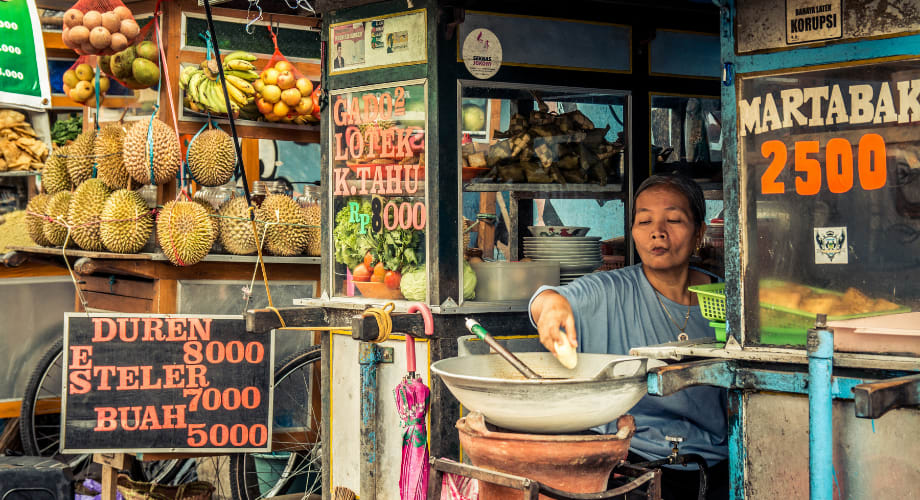
When looking for where and what to eat in Bali, it is essential to master the art of finding a great warung. In Bali and across the archipelago, warungs are where locals gather for affordable, home-style meals – often cooked by the owner’s family using recipes passed down through generations. They range from humble roadside setups with plastic stools and handwritten menus to more polished establishments that still retain their local soul. Warung makan serves meals, a warung kopi offers coffee and snacks, and a warung nasi specialises in rice dishes.
To spot a good warung, prepare to stare. First, check the crowd. If it’s packed with locals – especially around lunchtime –you’re onto something. Balinese families, construction workers on break, taxi drivers? All strong indicators. Next, scan the food display: look for vibrant colours, minimal wilting and sambal that looks like someone’s grandmother made it – flecked with lemongrass, shallots, maybe a whisper of lime leaf. Specials scrawled in Bahasa Indonesia on cardboard? That’s the gold standard.
Most importantly, keep an open mind. Don’t let plastic stools or modest façades throw you off. Many of Bali’s best warungs are humble by design – and quietly proud of it.
And as for online reviews? Filania recommends asking someone who actually lives and eats nearby instead – a shopkeeper, a café barista, your hotel’s housekeeping staff. They’ll know exactly where the sambal sings.
Bali food glossary
Arak
Distilled from the fermented sap of coconut, palm tree or rice, arak is Bali’s potent local spirit – milky-white, fiery and served neat, with Coke or stirred into cocktails. With an alcohol content that can soar to 50%, it’s a social lubricant best approached with respect – and maybe a small glass.
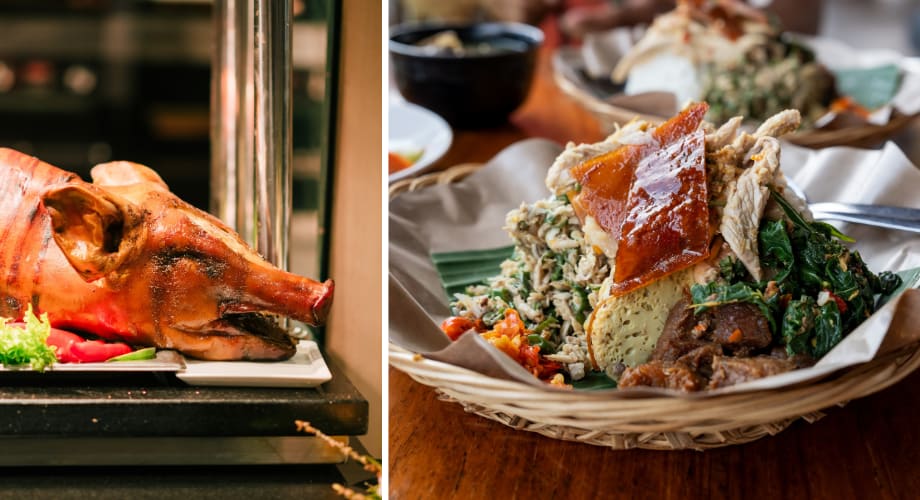
Spit-roasted suckling pig dish (Babi guling)
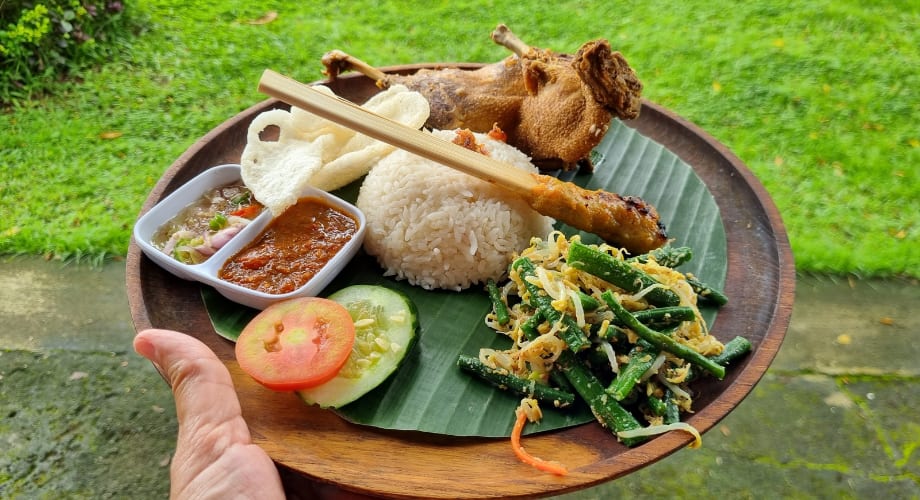
Balinese deep-fried duck (Bebek goreng)
Babi guling
Spit-roasted suckling pig, marinated with a blend of turmeric, lemongrass, galangal and other spices, then slow-roasted until the skin is crackling. Often served with rice, lawar (spiced vegetables) and sambal. Traditionally prepared for ceremonies and celebrations.
Bebek goreng
Less ritualistic than bebek betutu but widely loved, in this popular recipe duck is deep-fried until golden and crunchy on the outside, yet tender inside. Often served with sambal and rice.
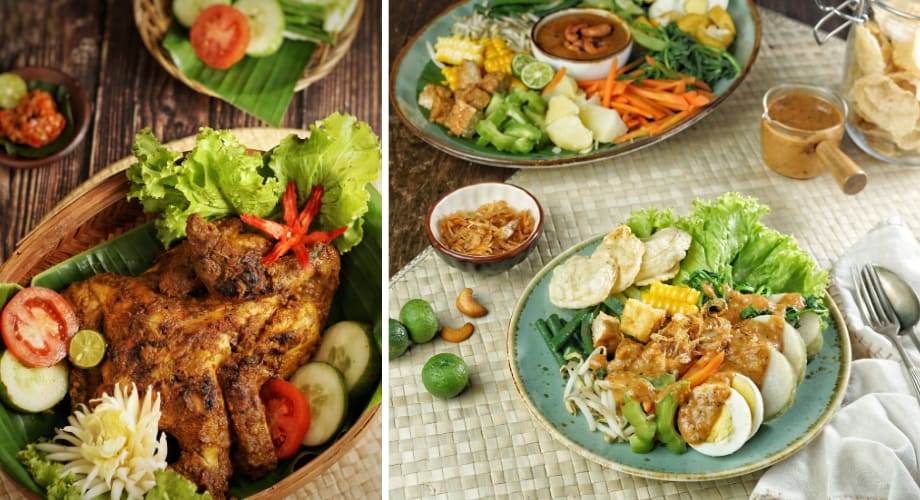
Left to right: Chicken in spice (Betutu) and Vegetables in peanut sauce (Gado-gado)
Betutu
Betutu can refer to a cooking technique and a spice mixture used to prepare dishes like ayam betutu (chicken) or bebek betutu (duck). The elaborate process involves marinating the meat in a flavourful blend of spices and then slow cooking it, often wrapped in banana leaves.
Gado-gado
Another popular dish found in Bali is Gado-gado. Its name translates loosely to “mix-mix,” and that’s exactly what it is – a medley of blanched and raw vegetables, tofu, tempeh, boiled eggs and compressed rice cakes, all generously coated in a rich peanut sauce.
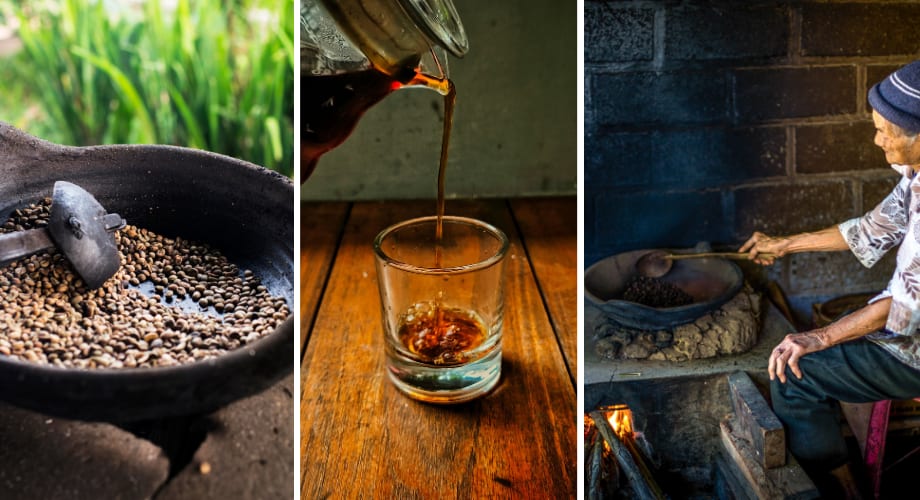
Bali's most iconic coffee bean - Kintamani Arabica
Kopi selem
Coffee in Bali is both a daily ritual and a cultural signature. The island’s most iconic bean is Kintamani Arabica, grown in the volcanic highlands of northern Bali. The traditional kopi selem – a thick, unfiltered brew made by boiling coarse grounds with sugar – will feel familiar to anyone who's lingered over Turkish coffee on the banks of the Bosphorus.
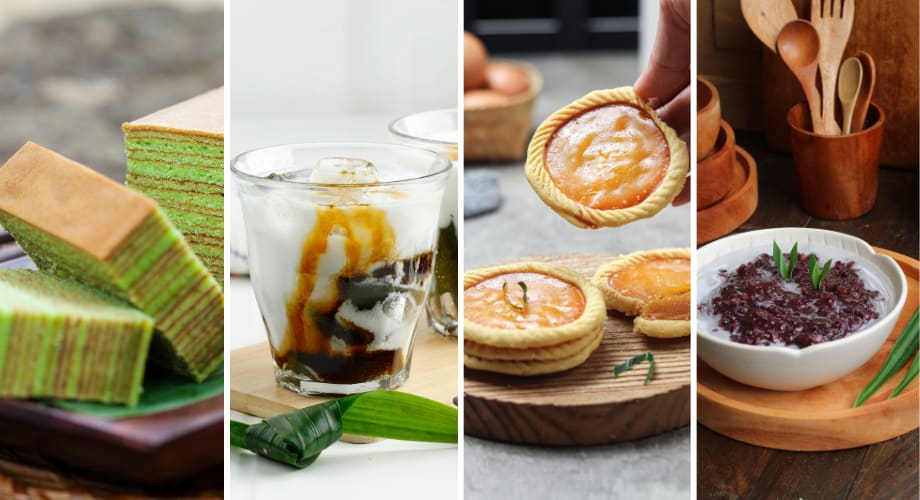
Left to right: lapis cake, grass jelly with coconut milk (es daluman), milk pie (pie susu), black rice pudding (bubur ketan hitam or bubur injun)
Makanan penutup or pencuci mulut
Bali’s desserts don’t rely on flamboyant plating or molecular trickery, but rather on texture, tradition and a quiet confidence in coconut milk.
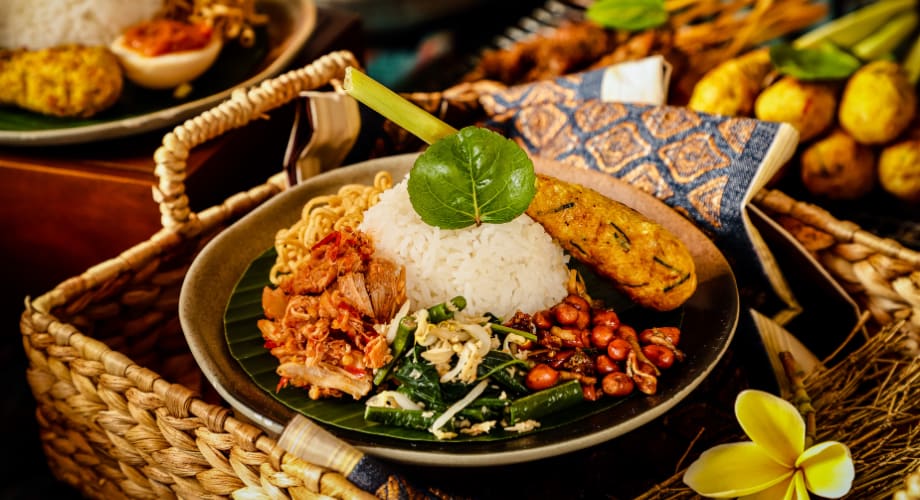
Nasi Campur is a Balinese meal of steamed rice with chicken, vegetable, egg, noodle, peanuts and satay; set among other side dishes
Nasi campur
Nasi Campur is a popular Balinese food that literally means 'mixed rice'. It consists of steamed rice with an assortment of small side dishes such as meats, vegetables, peanuts, egg and sambals.
Nasi ayam kedewatan
An Ubud-style chicken rice dish, featuring shredded chicken, spicy sambal, boiled egg, peanuts, satay and lawar (spiced vegetables). Spicy, satisfying and a lunchtime staple.
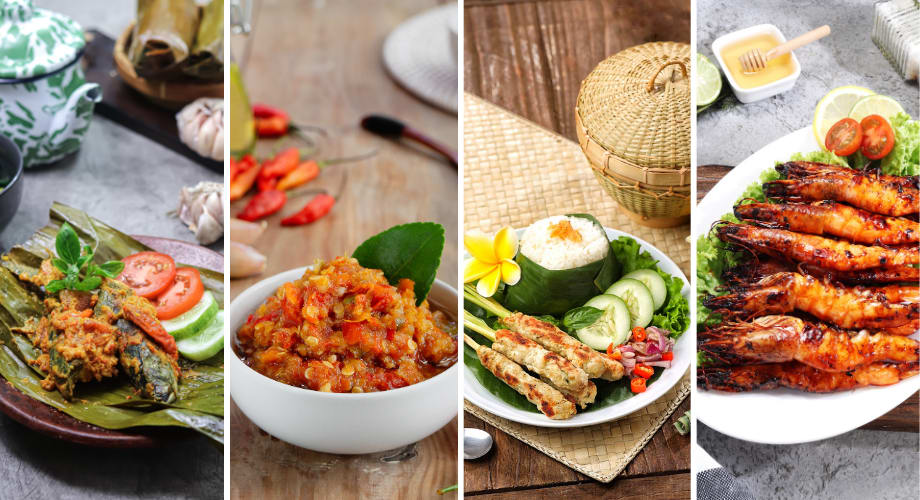
Left to right: Fish seasoned with herbs and spices (Pepes ikan), Sambal, Balinese satay (Sate lilit), Grilled prawns (Udang bakar madu)
Pepes ikan
Fish seasoned with herbs and spices, then wrapped in banana leaves and steamed or grilled. Fragrant, delicate and deeply infused with the aromatics of the wrapping.
Sambal
Less a condiment and more a cultural cornerstone, the fiery, fragrant companion appears at nearly every meal. Sambal is usually made with a blend of chillies, shallots, garlic, shrimp paste, lime juice and sometimes lemongrass or kaffir lime leaves. Each household, region, and even restaurant may have its own fiercely guarded recipe.
Sate lilit
To make Balinese satay, minced meat marinated in coconut milk and turmeric is wrapped around bamboo or lemongrass sticks and grilled to smoky perfection.
Udang bakar madu
Grilled, sweet-savoury honey-glazed prawns, often paired with sambal and rice.
Seminyak in Bali
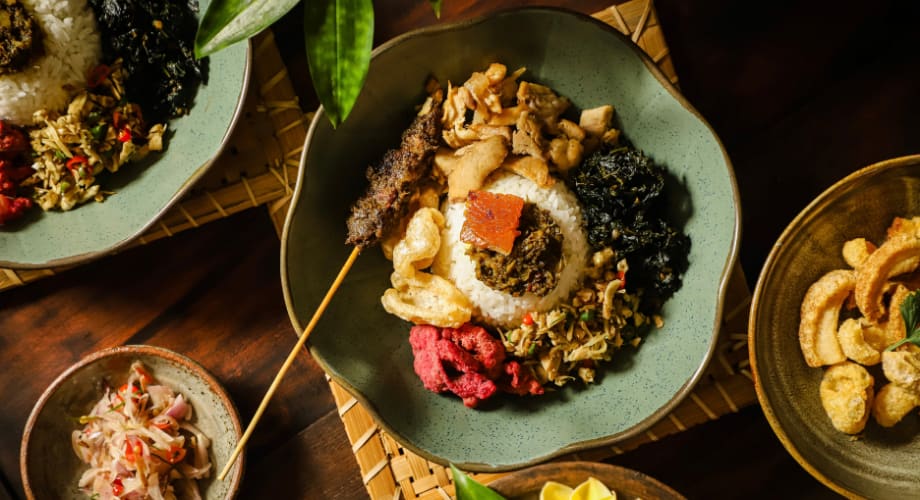
Balinese meal of rice with roast pork and other side dishes
Going local in Seminyak
Seminyak may be Bali’s most photogenic postcode, but beneath the sun hats and surfboards lies a dining scene that’s quietly grown up. Here, amid the incense and infinity pools, you’ll find a clutch of restaurants with serious architectural cred and some of the most popular Bali food. For those seeking a refined bite between boutique browsing and beach club lounging, several standouts deserve your reservation. Plus, best Seminyak warungs as recommended by our expert.
Made’s Warung
Vibe: local
Must try: nasi campur, pepes ikan, satay
A beloved institution since the 1960s, Made’s Warung blends nostalgia with culinary heritage. Expect time-honoured dishes and a lively stage for Balinese dance performances in the evenings. The crowd is a mix of locals, long-timers and expats hungry for tradition.
Warung Babi Guling Pak Malen
Vibe: local
Must try: babi guling
Pak Malen's crispy-skinned pork, laced with lemongrass and garlic and served with rice and a fiery sambal, is the island's go-to for a no-frills, all-thrill feast. A perfect initiation. The bar will be set high, and after this, you’ll never settle for a limp crackling again.
Groove
Vibe: poolside chic
Must try: gurami goreng (Delightfully crispy deep-fried freshwater fish served with sambal ebi)
For something chic yet laid-back, try Groove at Avani Seminyak Bali Resort. On the menu light bites rub shoulders with more substantial fare. Come for poolside vibes, stay for the best Gurami Goreng.
Merah Putih
Vibe: upscale
Must try: bebek goreng
A soaring cathedral of glass and greenery, Merah Putih is where Indonesian cuisine gets the fine-dining treatment. The hero crispy duck with spicy balado and pickled palm heart is a standout, offering a refined take on a local classic.
Calm and soulful in Ubud
Soulful bowls in Ubud
Ubud is a perfect place for a self-guided food crawl and a great starting point if you're wondering what to eat in Bali.
Once the preserve of yogis and seekers of spiritual enlightenment, the jungle-fringed town has quietly become Bali’s culinary capital, attracting a constellation of fine-dining stars, each plating up Indonesian heritage with a side of haute technique. But don’t be fooled by the white tablecloths and wine pairings: Ubud’s soul still simmers in its warungs, where locals queue for smoky satay and sambal that bites back. Just follow the locals on scooters or our expert’s advice below.
Bebek Tepi Sawah
Vibe: local
Must try: Bebek betutu, crispy duck
Set beside a sleepy rice field, this rustic-chic eatery serves the famed slow-cooked duck – tender, smoky and spiced to the bone. It's a perfect match for Ubud’s serene pulse.
Warung Nasi Ayam Kedewatan Ibu Mangku
Vibe: local
Must try: Nasi ayam kedewatan
This humble warung is worth a detour for an Ubud essential – shredded chicken, boiled egg, satay and sambal over rice, perfectly portioned and full of fire. It’s fast, humble and flat-out delicious.
Mozaic
Vibe: upscale
Must try: dry-aged duck rendang, coral trout confit
A pioneer of Ubud’s fine-dining scene, Mozaic blends French technique with Indonesian ingredients in a lush garden setting.
Herbivore by Locavore
Vibe: upscale
Must try: jackfruit rendang
For a break from animal protein, head to Herbivore by Locavore specialising in bold, plant-based reimagining of Indonesian fare.
Kirana
Vibe: jungly
Must try: Kerang Bakar - Jimbaran (Grilled scallops, Jimbaran style)
Tucked into the misty folds of Payangan forest, Anantara Ubud Bali Resort is home to Kirana – where dishes wander the Indonesian archipelago and the setting is out of this world.
Balinese food in Kuta Beach
Beyond the brunch board: Kuta’s real flavour
Kuta may be Bali’s original beach darling, but these days it’s better known for Bintang singlets and breakfast menus that read like a Bondi brunch board. Yet beneath the surf shops and sunburnt Aussies lies a more rewarding culinary current. If you know where to look, Kuta still serves up the kind of Balinese food that locals queue for and tourists rarely discover – flavours that are fiery, fragrant and blissfully free of sourdough.
Ayam Betutu Khas Gilimanuk
Vibe: local
Must try: ayam betutu
This crispy duck haven serves the bird counterpart to babi guling – steamed chicken marinated in a heady mix of turmeric, chilli and ginger. This Gilimanuk-born franchise serves it piping hot and heroically spicy.
Bale Udang
Vibe: family-friendly
Must try: udang bakar madu
The question of what to eat in Bali becomes more pressing when travelling with kids. Floating bamboo huts, koi-filled ponds and the scent of grilled seafood in the air – this is where Sunday lunch becomes a family affair. Serene and flavour-forward.
If you’ve chosen Uluwatu as your Bali base, you’re probably considering hitting the waves (find the best breaks with our Surfing Guide to Bali). Once little more than a surfer’s secret, Uluwatu now balances beach hair with barefoot luxury. And like its crashing waves, the food scene here is all about contrast: humble warungs tucked into roadside corners and fine-dining cliff perches with wine lists as long as the sunsets.
Warung Bejana
Vibe: local
Must try: pesan be pasih
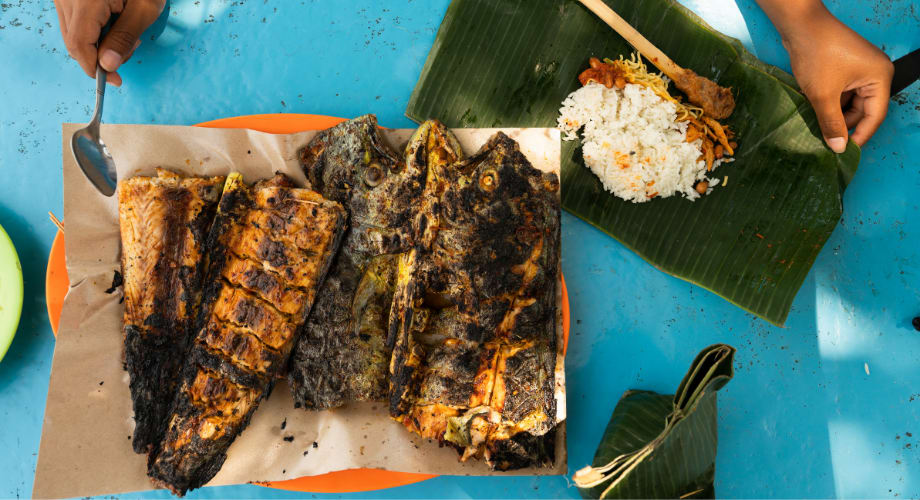
Start modestly at Warung Bejana – a family-run spot near Padang Padang where the sambal matah packs a serious punch. Their grilled fish arrives on banana leaves, no pretense required.
D’Padang
Vibe: local
Must try: pepes ikan, nasi campur, satay
Just steps from the legendary Padang Padang break, D’Padang dishes up pepes ikan and nasi campur to locals and savvy surfers alike (a word of wisdom: arrive early, the smoky satay disappears fast.)
Golden-hued perfection: nasi goreng
Legian – a slice of Bali’s Golden Middle
Wedged between Seminyak’s sheen and Kuta’s chaos, Legian is the kind of place where you can sip a perfectly executed flat white at breakfast and slurp bakso (local meatballs) from a plastic stool by lunch. It's Bali’s comfort zone – steady, sun-soaked and full of edible charm.
Warung Padma
Vibe: local
Must try: nasi goreng
Warung Padma is a stalwart for locals, with nasi goreng as fluffy as the waves a block away.
Fat Bowl
Vibe: local
Must try: Wagyu rendang sliders, charcoal bao with slow-cooked pork
At this crowd-pleaser, Indonesian staples mingle with cheeky Asian-fusion plates.
With so much on the table, it might take a week – and a forgiving waistband – to decide whether Bali truly deserves the crown as Southeast Asia’s next culinary capital. What’s harder still is deciding whether to tell anyone else about it. Some gems, after all, shine brightest when kept a little secret.
Stay near awarded eateries and local haunts serving popular Balinese food with Minor Hotels in Bali.