One of the true stars of Downton Abbey, the hit drama about the aristocratic Crawley family in early 20th‑century England, is Highclere Castle in Hampshire. Ever since the series premiere, the Jacobean manor that stood in for the Crawleys’ estate has been a pilgrimage site for fans, welcoming visitors by day. Yet it remains a private home, much to the chagrin of those who would like to spend a night here.
While Highclere keeps its doors closed after dusk, there are plenty of other historic buildings that invite guests to stay. Our round‑up of historical hotels lets you sleep beneath frescoes, dine in former chapels, or sip cocktails in what was once a consul’s residence.
Jump to
Adaptive reuse, the art of giving old buildings new purpose, took root in Europe. The Old Continent, rich in palaces, castles and monasteries, led the way: Italy’s paradores and France’s château hotels set the standard. From these early adopters the idea spread, giving heritage architecture a new lease on life as luxury historic hotels.
Prague: cocktails in a bank vault
- Current occupant: NH Collection Prague Carlo IV
- Built: Late 1890s as a neo-Renaissance bank
- Reincarnations: Converted into a palace hotel; listed as National Heritage property
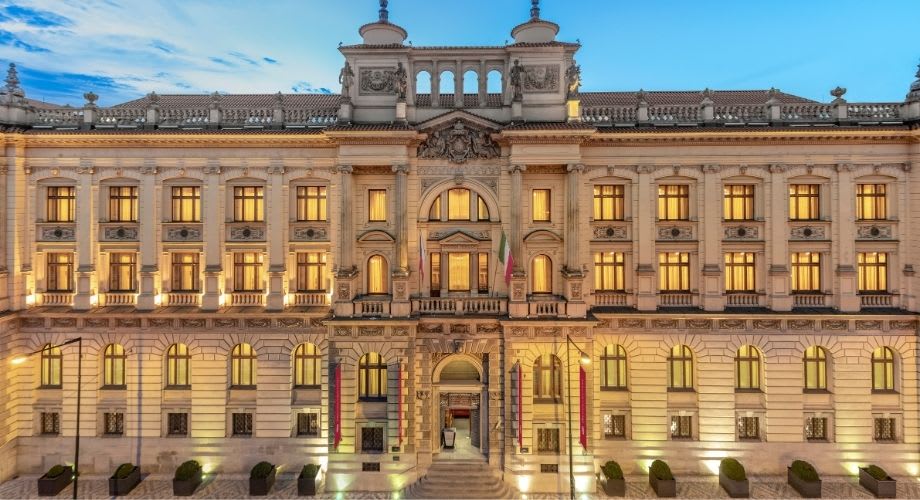
The marble-clad lobby of NH Collection Prague Carlo IV may hum with honeymooners today, but its origins were more pragmatic than romantic. Raised in the late 1890s as a neo‑Renaissance bank, its marble halls once echoed with the clink of coins and the shuffle of clerks.
Today, the building stands as a listed National Heritage property, reborn as a five‑star hotel with frescoed ceilings and gilded details. At the aptly named Vault bar, guests sip cocktails in the original treasury, complete with a Wertheim wrought‑iron door. In the historical wing, home to the signature suites, the neo‑Renaissance spirit endures in parquet floors, rich upholstery and elegant cabinetry.
Florence: Italy’s oldest hotel with a towering past
- Current occupant: NH Collection Firenze Porta Rossa
- Built: 13th century as a lodging house
- Reincarnations: Bartolini - Salimbeni palace; later a hotel
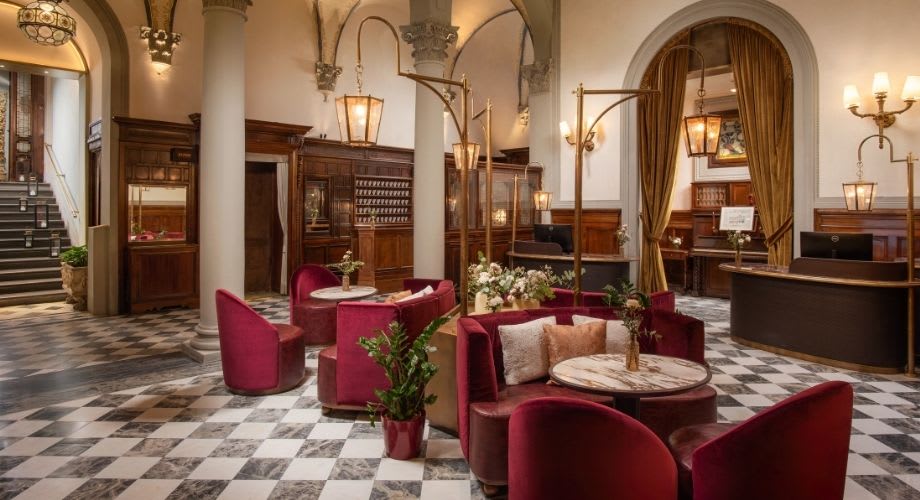
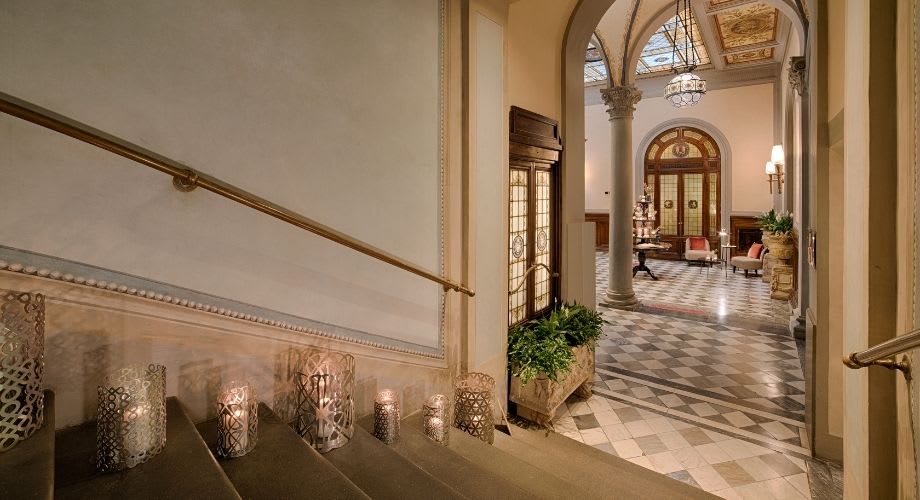
Florence’s NH Collection Firenze Porta Rossa is widely considered Italy’s oldest hotel, with origins as a lodging house dating back to the 13th century, later incorporated into the Bartolini‑Salimbeni property. Today it feels decidedly palatial, with frescoes, medallions and antique furniture a far cry from the humble inn that once welcomed medieval travellers. Step into the entrance and you’ll find stained‑glass windows by Ulisse De Matteis, the celebrated 19th century artist behind works in both Florence and Siena’s cathedrals.
The hotel’s biggest draw is the original tower rising above the city, now the Torre Monalda Suite. Panoramic views are matched by a pillow menu, a luxurious touch that, by coincidence, echoes the Bartolini-Salimbeni family motto “Per non dormire” (“Lest we sleep”). The phrase recalls the legend of a crafty wool merchant who outwitted his rivals in Venice by keeping them asleep while he secured lucrative contracts, paving the way to the family’s fabulous wealth.
The motto still decorates the cross‑bars of the windows at Palazzo Bartolini Salimbeni on Piazza Trinita, the first palace in Florence built in the “Roman” Renaissance style. Just a short walk from the hotel, it is well worth a visit to explore the link between the two buildings.
Palermo: baroque aristocracy
-
Current occupant: NH Collection Palermo Palazzo Sitano
-
Built: 1712–1860, originally three aristocratic residences
-
Reincarnations: later combined into a single hotel
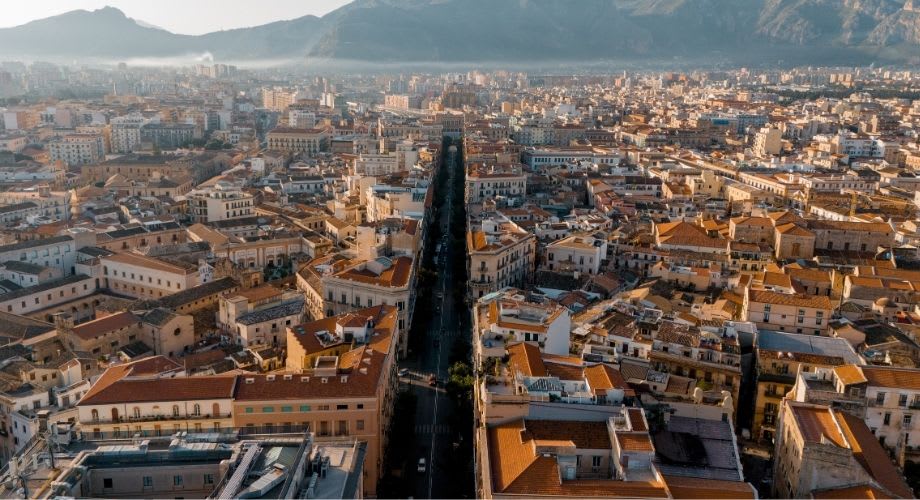
In Palermo, a city far removed from Florence both architecturally and temperamentally, NH Collection Palermo Palazzo Sitano offers a different take on Italian heritage. Formed from a cluster of 17th‑ and 18th‑century aristocratic residences, the building’s baroque flourishes such as wrought‑iron balconies, soaring columns and grand arches speak of the exuberance of Sicilian nobility.
When three stately palazzi along Via Vittorio Emanuele were brought together as one, the period windows and graceful detailing were carefully retained. They’re best admired from the main restaurant, set within a cloister that showcases some of the hotel’s finest Baroque elements. Book the Fresco and Balcony Suite, where pared‑back modern furnishings let the frescoed ceiling take centre stage.
Clifftop monastery turned Amalfi icon
-
Current occupant: Anantara Convento di Amalfi Grand Hotel
-
Built: 13th century Capuchin convent
-
Reincarnations: Nautical institute, hotel in late 19th century; cloisters restored in 1930s
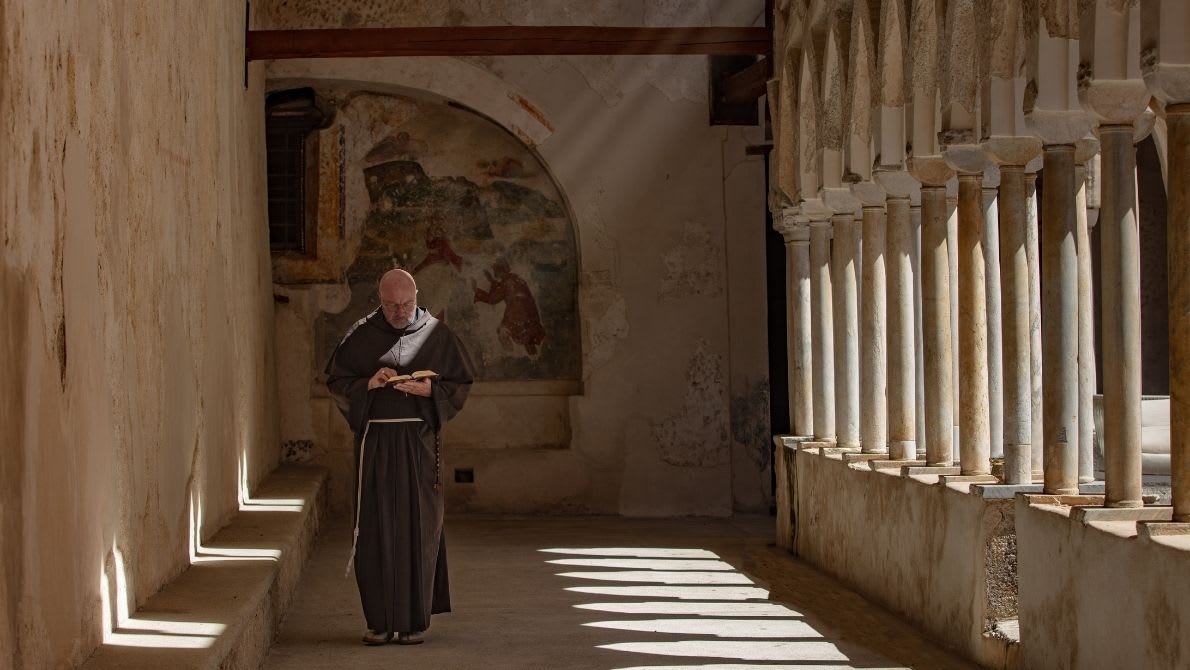
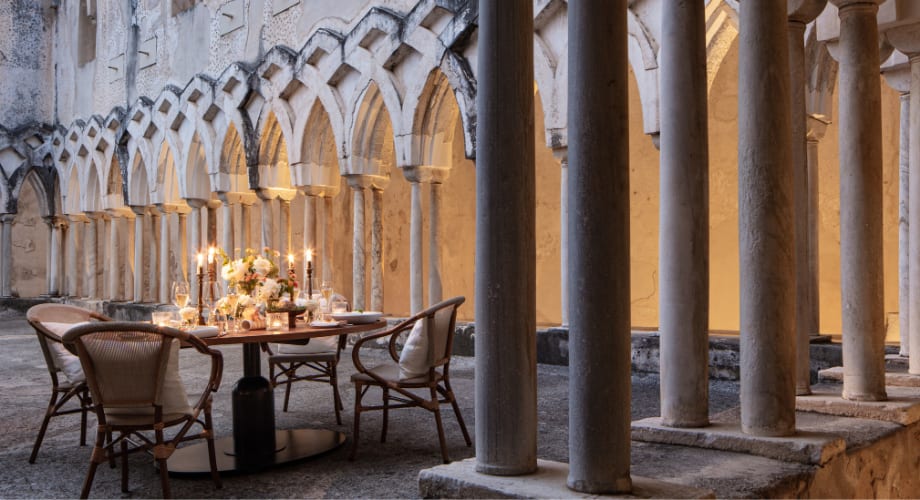
Further south, Anantara Convento di Amalfi Grand Hotel occupies a 13th‑century monastery perched high above the Amalfi Coast. Expanded in the late 16th century into a Capuchin convent with cells, refectory and chapel, the site’s monastic soul has endured through centuries of change, before finally embracing its destiny as a hotel in the late 19th century.
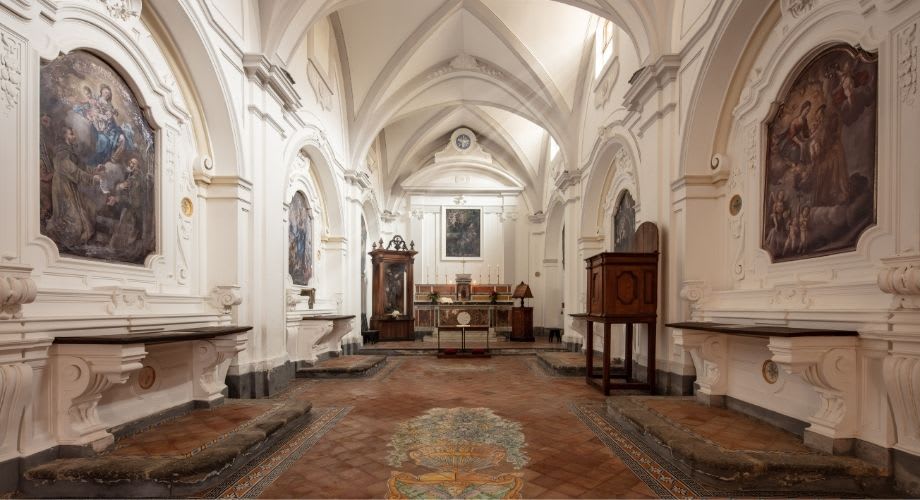
Today, cloisters and chapel remain intact, their austere beauty softened by Mediterranean light and sea breezes drifting in from the private beach club. Meanwhile, the infinity pool and terraces feel like sanctuaries in their own right.
Stay in the Suite del Priore, once the abbot’s room, now sleekly refurbished with every modern comfort. As you gaze across the cloisters to the sea, a glass of Amaro dei Cappuccini in hand, it’s easy to drift into loftier thoughts. Acting as your spiritual guide is Friar Marcus, an ordained monk. Walking together through the convent’s cloisters, church and gardens, you will learn about the Franciscan philosophy of Pace e Bene (peace and all good), with its focus on humility, prayer and active compassion. For fans of luxury historic hotels, this is the kind of experience that defines the genre.
Rome’s neoclassical grandeur above ancient baths
-
Current occupant: Anantara Palazzo Naiadi Rome Hotel
-
Built: 298–306 AD by order of Emperor Diocletian
-
Reincarnations: monumental civic and commercial complex by Gaetano Koch; later a hotel
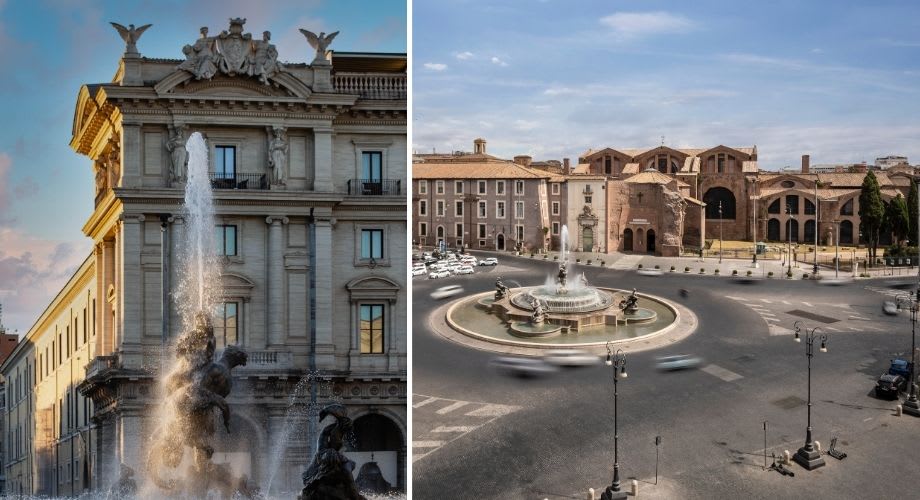
If the lives of emperors are literally your Roman Empire, check intoAnantara Palazzo Naiadi Rome Hotel, a neoclassical showpiece designed in 1887 by Gaetano Koch as part of the grand palazzi framing Piazza della Repubblica. His sweeping semicircular façades echo the ancient exedra of the Baths of Diocletian, the largest thermal complex of the Roman world, whose ruins, glimpsed beneath glass floors, lend the hotel’s meeting spaces a touch of Indiana Jones adventure.
Elsewhere, another chapter of history awaits: the Vatican’s grain store, built in 1705 by order of Pope Clement XI, now forming the fourth floor of one of the hotel’s wings. From the hotel’s slick rooftop venue, Rome’s eternal drama unfolds with views across Piazza della Repubblica, while Anantara Spa lets guests feel like emperors with its signature Terme di Diocleziano ritual.
Tie the knot in Amsterdam’s oldest chapel
- Current occupant: NH Collection Amsterdam Barbizon Palace
- Built: 17th century townhouses; 15th century St. Olaf Chapel
- Reincarnations: Converted into a hotel retaining beams, chapel as event space
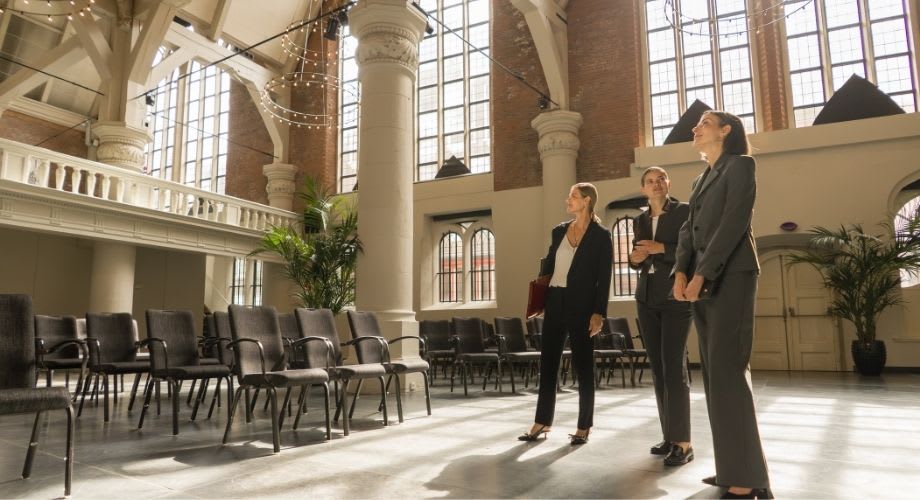
Historical hotels are popular wedding venues, their longevity a metaphor for lasting unions. In the Netherlands, NH Collection Amsterdam Barbizon Palace, formed from 17th‑century townhouses, has a 15th‑century chapel at its heart, making it a natural choice for couples looking to tie the knot. St. Olaf’s Chapel, one of Amsterdam’s oldest surviving structures, is reached through an underground passage, offering a suitably dramatic entrance for what awaits inside.
Here you might exchange vows beneath vaulted Gothic ceilings, Saint Olaf (Norway’s patron saint long revered by seafarers) looking on approvingly, or find yourself swept up in one of the occasional Candlelight Concerts. As thousands of candles flicker on, a string quartet launches into Vivaldi or Coldplay, the acoustics of the medieval stonework amplifying every note.
The chapel, now a national monument and licensed for civil ceremonies, is no stranger to spectacle. It can seat 250 for dinner or host 520 for cocktails, and the hotel obliges with suitably theatrical flourishes: balcony receptions, champagne towers, chocolate fountains, even boat arrivals courtesy of a nearby jetty. The best part is that you don’t have to stumble far afterwards, with suites and fine dining just steps away.
From a humble coffee house to Amsterdam’s grande dame
-
Current occupant: Anantara Grand Hotel Krasnapolsky Amsterdam
-
Built: 1856 coffee house by Adolf Wilhelm Krasnapolsky
-
Reincarnations: Expanded into hotel with Wintergarden and ballroom
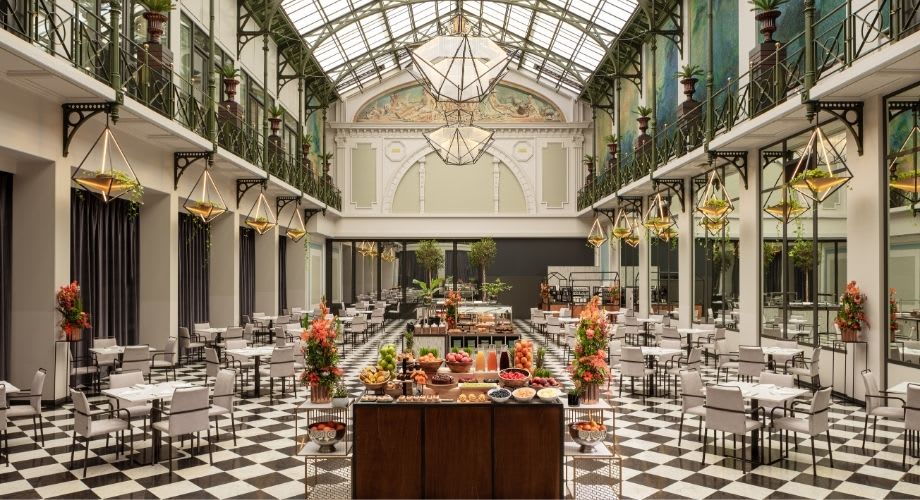
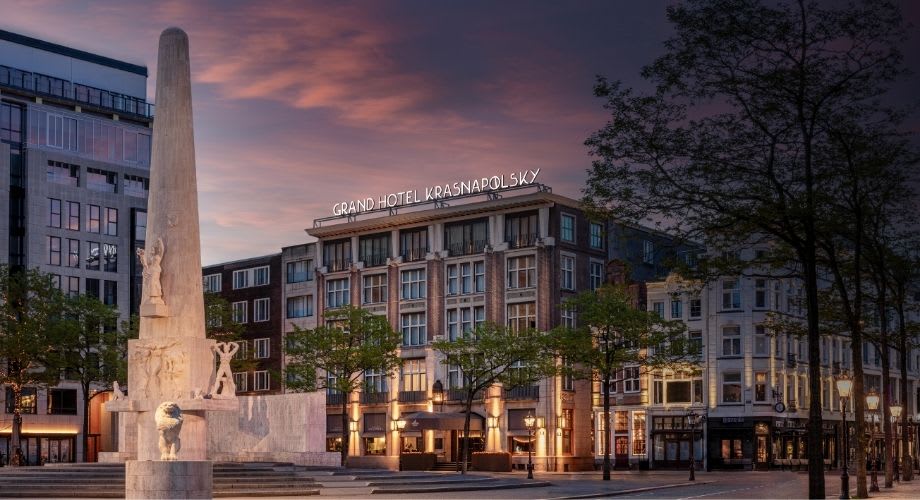
On Dam Square, where Amsterdam itself was born from a medieval dam across the Amstel, stands Anantara Grand Hotel Krasnapolsky Amsterdam. Its story begins in 1856, when Adolf Wilhelm Krasnapolsky, a Polish émigré with a knack for hospitality, opened a modest coffee house. The aroma of beans and chatter of merchants soon gave way to something grander: an orangerie‑like Wintergarden and a ballroom that became the stage for the city’s elite.
Today, the hotel remains Amsterdam’s grande dame, a five‑star landmark with Michelin‑starred dining and front‑row views of Dam Square. Step straight into the Grand Café from the square’s new entrance and you’ll find sunlight spilling through panoramic windows, framing the Royal Palace.
And if you decide to linger longer, the newly renovated rooms and suites make the most of the square’s views. From here, you’re perched above the very ground where Amsterdam’s trade once flourished, markets bustled, weigh houses stood and civic life unfolded.
Rembrandt’s Night Watch and the Beatles’ stay
- Current occupant: Tivoli Doelen Amsterdam
- Built: 1481 Swych Utrecht tower as militia base
- Reincarnations: Expanded into City Hall, then hotel in 1815
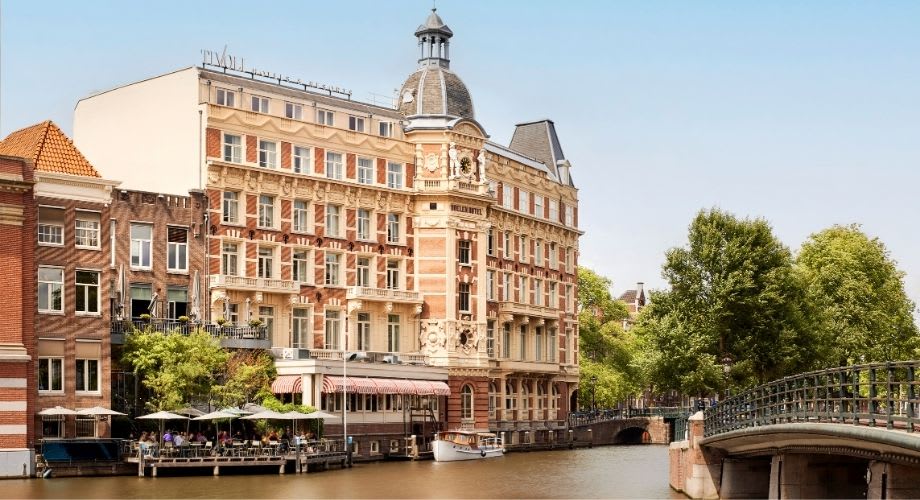
Another property with stellar pedigree, Tivoli Doelen Amsterdam Hotel traces its roots back to the 16th century, when a watchtower formed part of the city’s defences. By the 17th century, the building had become the meeting place of the Kloveniers militia, the civic guard who, in 1642, famously commissioned Rembrandt’s Night Watch. For more than 70 years the masterpiece hung on these very walls, before moving to the Rijksmuseum (explore the city’s top museums with our guide to Amsterdam.)
The property reinvented itself in the late 19th century as a hotel and quickly became a magnet for illustrious guests: Queen Victoria, Empress Elisabeth of Austria, and, in 1964, the Beatles, who checked in after their Amsterdam concert. Today, the Rembrandt Suite marks the spot where the Night Watch once loomed with a replica, a reminder that in this city, art and history are inseparable.
Literary Madrid in a Viceroy’s palace
- Current occupant: NH Collection Madrid Palacio de Tepa
- Built: 1808 for the last Viceroy of Spain in Mexico
- Reincarnations: Neoclassical palace with 16th‑century water channels and foundations preserved behind glass in reception
In the Barrio de las Letras, where Cervantes once scribbled and Lope de Vega plotted his plays, rises the elegant NH Collection Palacio de Tepa. Built in 1808 for Don Juan de Tepa, briefly Viceroy of New Spain, the palace was conceived as a neoclassical residence by Juan de Villanueva, the same architect who gave Madrid its famous Prado Museum.
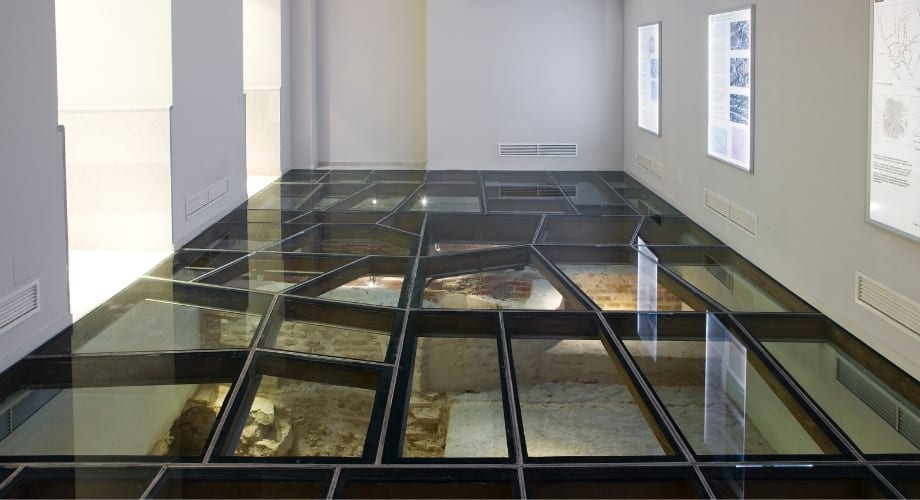
The building has always carried the weight of history. Step into reception today and you’ll find genuine 16th‑century water channels and foundations preserved behind glass, unearthed during renovations and now folded into the décor. With Palacio de Tepa offering one of the city’s most elegant vantage points on both past and present, fans of historical hotels in cultured, bohemian quarters will find a kindred soul.
Stay in the heart of Madrid’s art triangle
- Current occupant: NH Madrid Nacional
- Built: 1920s by Modesto López Otero
- Reincarnations: a hotel; UNESCO “Landscape of Light” site
On the Paseo del Prado, home to Madrid’s grandest museums, stands NH Madrid Nacional. Conceived in the 1920s by Modesto López Otero, the architect who later masterminded the city’s University City inspired by American-style campuses, the building was a symbol of modernity in a capital still finding its cosmopolitan stride.
Today, NH Madrid Nacional sits proudly within the UNESCO‑listed Landscape of Light, a cultural corridor that stitches together the Prado, Reina Sofía and Thyssen‑Bornemisza. From its doorstep, guests can wander between Velázquez, Picasso and Van Gogh in the span of an afternoon (build your perfect itinerary with our guide to Madrid's districts), before returning to a hotel that has witnessed a century of Madrid’s cultural life.
Brussels’ interwar glamour, still in style
- Current occupant: NH Collection Brussels Centre
- Built: 1929 by Michel Polak
- Reincarnations: A hotel from the start, now modernised
Compared to Madrid, Brussels doesn’t always market itself as a cultural powerhouse. Its association with politics as the de facto capital of the European Union doesn’t help. Yet this bureaucratic veneer belies a thriving cultural scene.
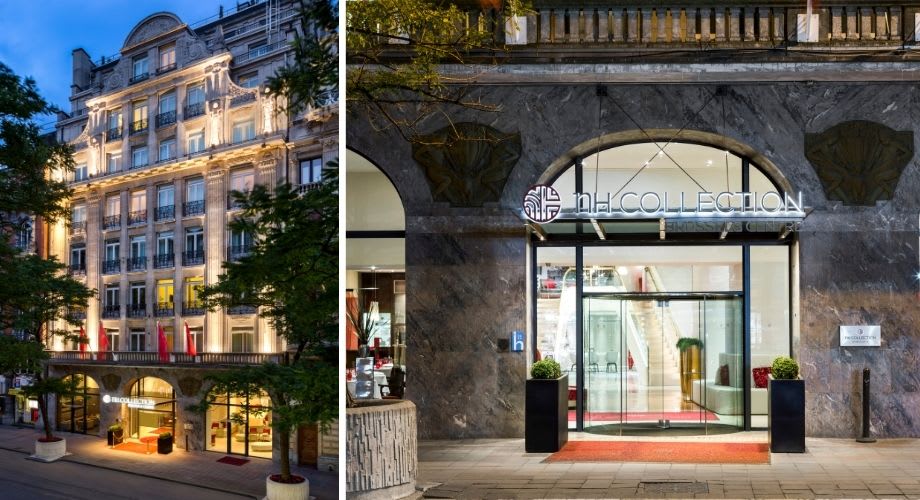
Nowhere is this vibrancy more visible than on Boulevard Adolphe Max, where Brussels’ grand avenues still echo the optimism of the interwar years. It was here, in 1929, that Hôtel Atlanta was conceived as a showcase of Art Deco elegance, quickly becoming a symbol of modernity and welcoming travellers to a city reinventing itself as a European capital.
The hand of architect Michel Polak is unmistakable: sweeping lines, geometric flourishes and a confident blend of classicism and modernism that gave Brussels its architectural swagger between the wars. The interiors of
NH Collection Brussels Centre preserve the glamour of a bygone era: polished marble, bold geometry and a lobby made for jazz‑filled evenings. A century on, the building remains a monument to Brussels’ Art Deco moment.
Student house meets Helsinki’s oldest continuously operated hotel
- Current occupant: NH Collection Helsinki Grand Hansa
- Built: Seurahuone (1833, relocated 1913); New Student House (1910)
- Reincarnations: Combined heritage buildings, restored interiors for 2024 opening
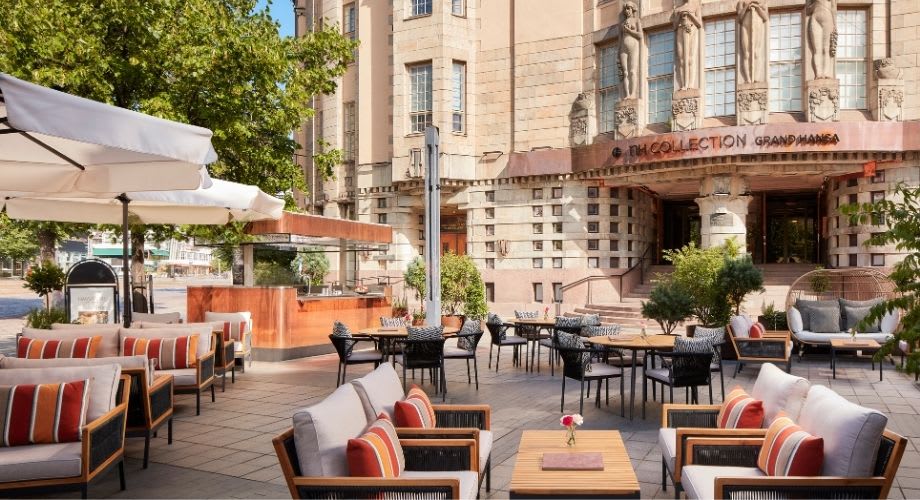
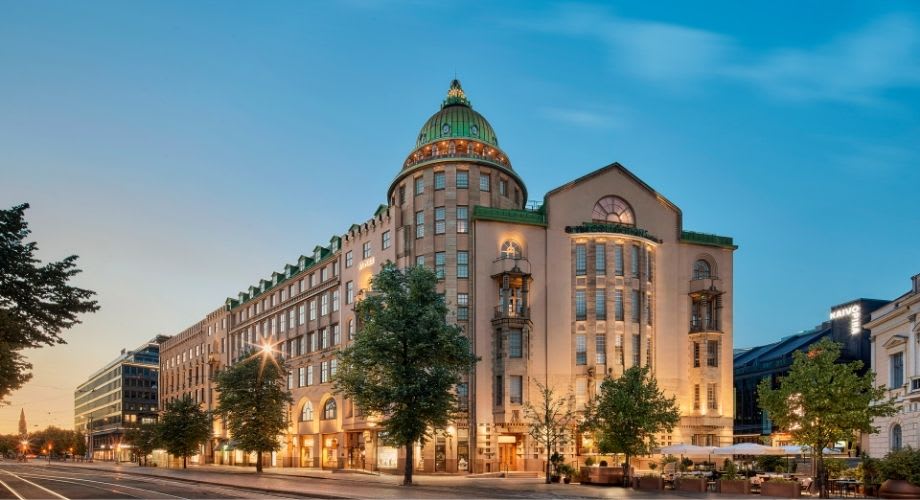
In the heart of the Finnish capital, NH Collection Helsinki Grand Hansa brings together two storied addresses: the Art Nouveau New Student House of 1910 and Seurahuone, the city’s oldest continuously operated hotel, first established in 1833 and relocated to its current site in 1913. The union creates a property that is both scholarly and social, where a Kupoli cocktail bar crowns the dome tower with panoramic views, while a spa with a Finnish sauna nods to tradition.
Most of the interiors of the New Student House have shifted with the times, but its façade has held firm. Stylised historicist decoration, arched windows, ornamental balconies and a clear symmetry still define the building’s presence on the street. In 1925, as part of expansion works, a row of statues was added above the main entrance, replacing nationalistic motifs with humanistic figures of four classical temperaments, their phlegmatic expressions surely shaped by Finland’s nippy winters.
An ode to Budapest’s golden age
- Current status: Anantara New York Palace Budapest
- Built: 1894 as New York Life Insurance HQ
- Reincarnations: Café hub for artists; closed under communism; restored in 2006
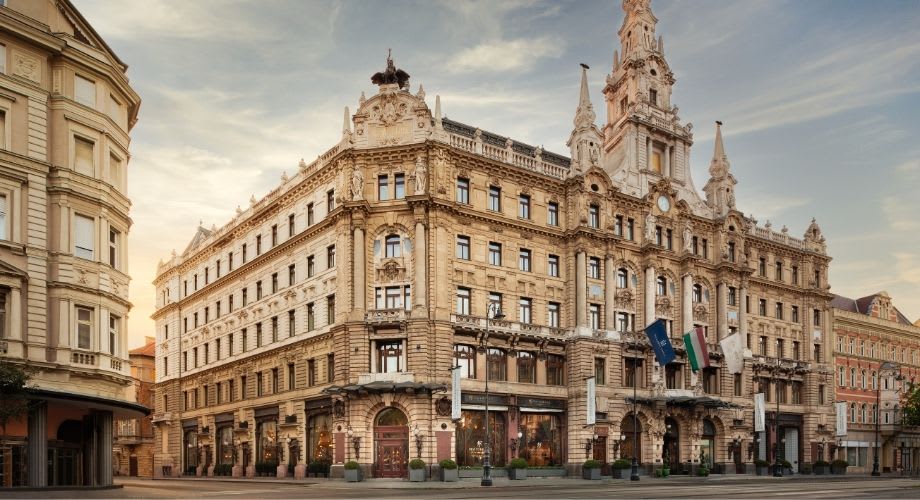
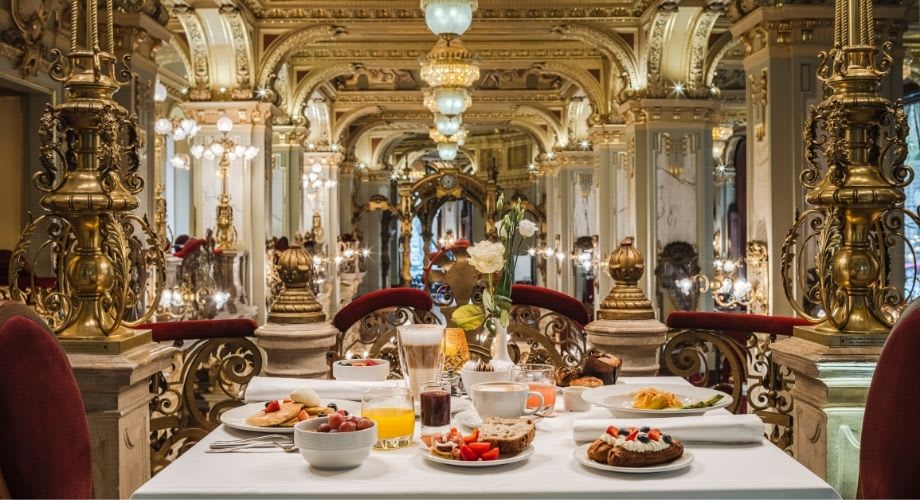
On the eastern bank of the Danube rises the Anantara New York Palace Budapest, a dazzling monument to the city’s Belle Époque. To cross its threshold is to step back into the Habsburg heyday, where opulence was the order of the day.
Completed in 1894 as the headquarters of the New York Life Insurance Company, the palace swiftly shed its identity as an office block. Its ground‑floor café evolved into a salon for writers, artists and editors. Behind the imposing façade of stonework and sculptural detail, architect Alajos Hauszmann and his team conjured a lavish medley of Renaissance, Baroque and Art Nouveau. Inside, marble columns, gilded ceilings and grand chandeliers set the stage for conversations that shaped a nation’s cultural identity.
The story dimmed under communism, when the café was shuttered and the palace fell into decline. Yet its bones endured, with Venetian chandeliers, gilded plasterwork and marble staircases waiting patiently for revival. That renaissance arrived in 2006, when a meticulous restoration returned the palace to its former splendour. Today, the New York Café has reclaimed its title as “the most beautiful café in the world”.
Salon of Europe on the Côte d’Azur
- Current occupant: Anantara Plaza Nice Hotel
- Built: 1848 as Hotel de France
- Reincarnations: Hotel Plaza (1900), Belle Époque remodel (1910s)
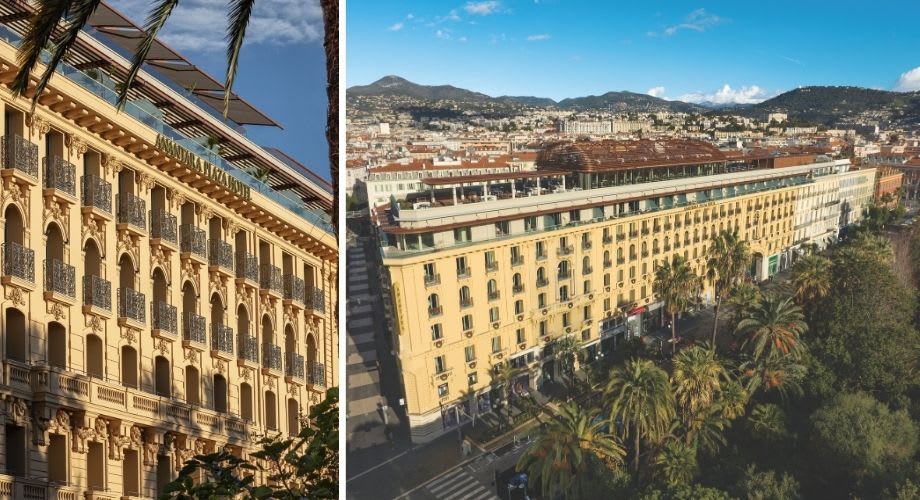
France built lavishly during the Belle Époque, with Paris claiming the spotlight through icons like the Eiffel Tower. Yet the Côte d’Azur acquired its share of architectural jewels and historical hotels. As Nice transformed from a peaceful winter haven into the glittering social and cultural heart of the Riviera, one hotel led the way, both architecturally and socially.
Opened in 1848 as the Hotel de France, the property quickly became the social heart of Nice. Reborn in 1900 as the Hotel Plaza, it presided over Riviera society with sweeping views of the Mediterranean, while the neighbouring Promenade des Anglais earned the moniker “salon of Europe.” Its Belle Époque facelift in the 1910s gave the building the elegance that endures today: ornate façades, grand interiors and Riviera glamour distilled into stone and stucco.
From aristocrats wintering on the Côte d’Azur to presidents keeping pieds‑à‑terre, the hotel has long been a backdrop for stories. Today, Anantara Plaza Nice Hotel continues that legacy as a refined stage for society and culture.
Lisbon’s boulevard icon
- Current occupant: Tivoli Avenida Liberdade Lisboa
- Built: Pensao Tivoli (1933), expanded 1957
- Reincarnations: A hotel tied to Teatro Tivoli; home to actress Beatriz Costa for decades
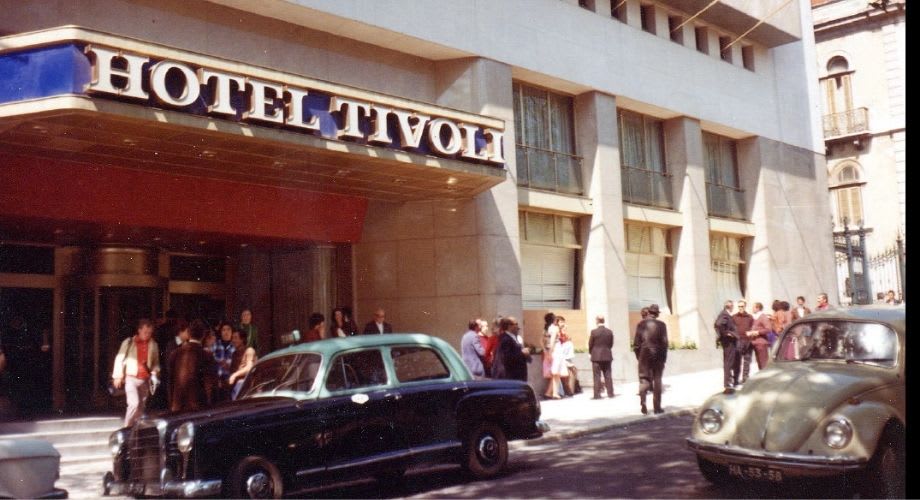
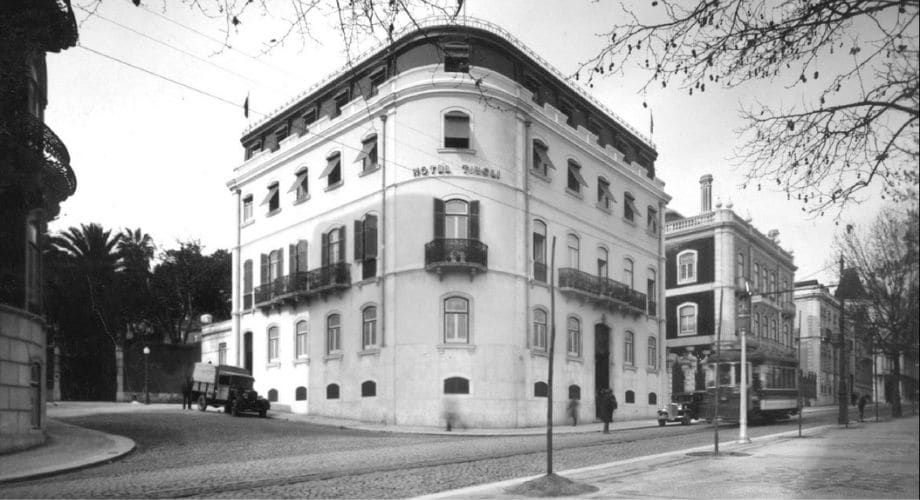
Lisbon’s Tivoli Avenida Liberdade Lisboa is considered a cultural landmark on the city’s grand boulevard. First opened in 1933 as Pensao Tivoli and expanded in 1957, it quickly became synonymous with Avenida da Liberdade’s cosmopolitan flair. Its name nods to Teatro Tivoli, the music hall and cinema that still anchors the avenue.
For decades, actress Beatriz Costa, a star of Portuguese theatre and cinema, made the hotel her home, most famously in room 600, where her presence is still fondly remembered. Today, the Tivoli continues to play host to Lisbon’s social life, with the SEEN Sky Bar offering rooftop views across the city and a seafood brasserie that keeps the boulevard buzzing.
Bangkok’s grand dame reimagined
- Current occupant: Anantara Siam Bangkok Hotel
- Built: Conceived late 1970s, opened 1983
- Reincarnations: a hotel from the start
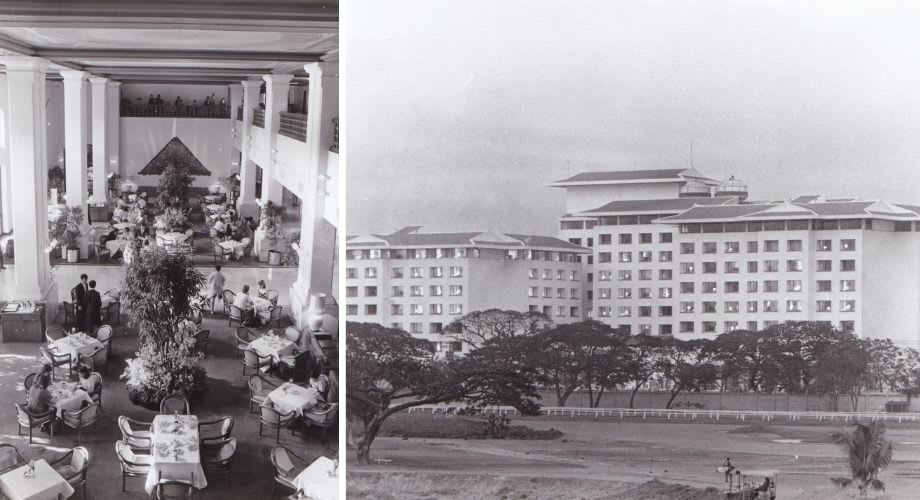
Anantara Siam Bangkok Hotel has long been one of the city’s most established addresses, a place where four decades of transformation are reflected in polished service and timeless design. Rising on land once gifted to the people of Bangkok by King Rama VI, the property opened in 1983 under the hand of architect George Wimberley and quickly earned its reputation as Asia’s grand dame of luxury hospitality.
Monumental hand‑painted silk murals, tranquil garden courtyards and storied Thai service defined its character, while its Ratchadamri location placed it at the heart of Bangkok’s cosmopolitan life. A hotel-wide transformation set for completion in 2026 will reimagine the property for modern tastes, while preserving the soul that makes luxury historic hotels so special. For an overnight experience, ask for the Jim Thompson suite that nods to Thailand’s “silk king,” whose delightful Bangkok canal house today serves as a museum.
Riverside serenity with consular roots in Chiang Mai
- Current status: Anantara Chiang Mai Resort
- Built: 1915 (on land granted to the British in 1884)
- Reincarnations: British Consulate; private residence; restored heritage building; hotel centerpiece
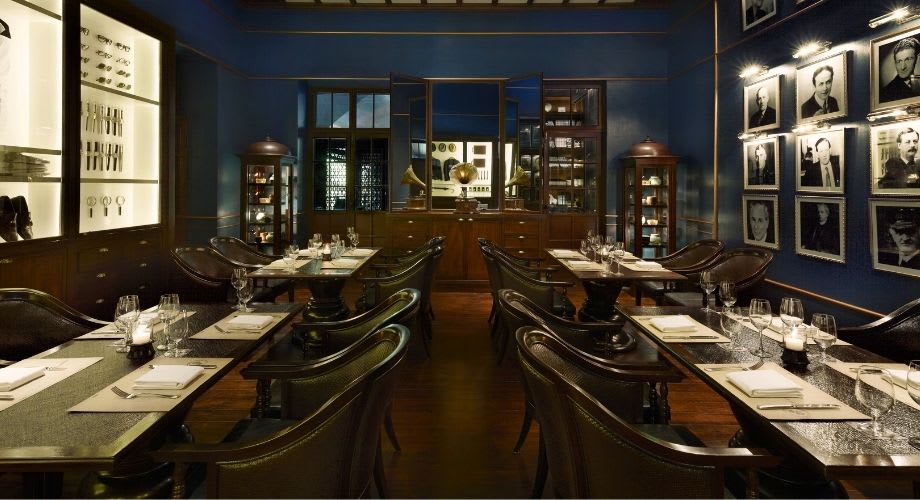
In lush Thai hill country, Anantara Chiang Mai Resort occupies a building with a distinctly colonial past. Once the British Consulate, the riverside compound served as a diplomatic outpost from the late 19th century until 1970. Its teakwood halls, shaded verandas and elephant stables spoke of empire and trade, of a time when Chiang Mai was a frontier city on the edge of Siam.
Today, the consulate’s main house anchors the property, its dignified proportions preserved in restaurants and lounges. Afternoon tea on the lawn remains the most graceful way to slip into its spirit. Around the heritage structure, minimalist modern wings and gardens create a dialogue between old and new. On the banks of the Ping River, guests sip cocktails in what was once the consul’s residence and feel the weight of history in every timber beam.
Even if nostalgia isn’t what draws you to historical hotels, these bastions of charm, courtesy and discretion offer what many crave today: continuity in an ever‑changing world.