Why Location Matters for First-Time Visitors
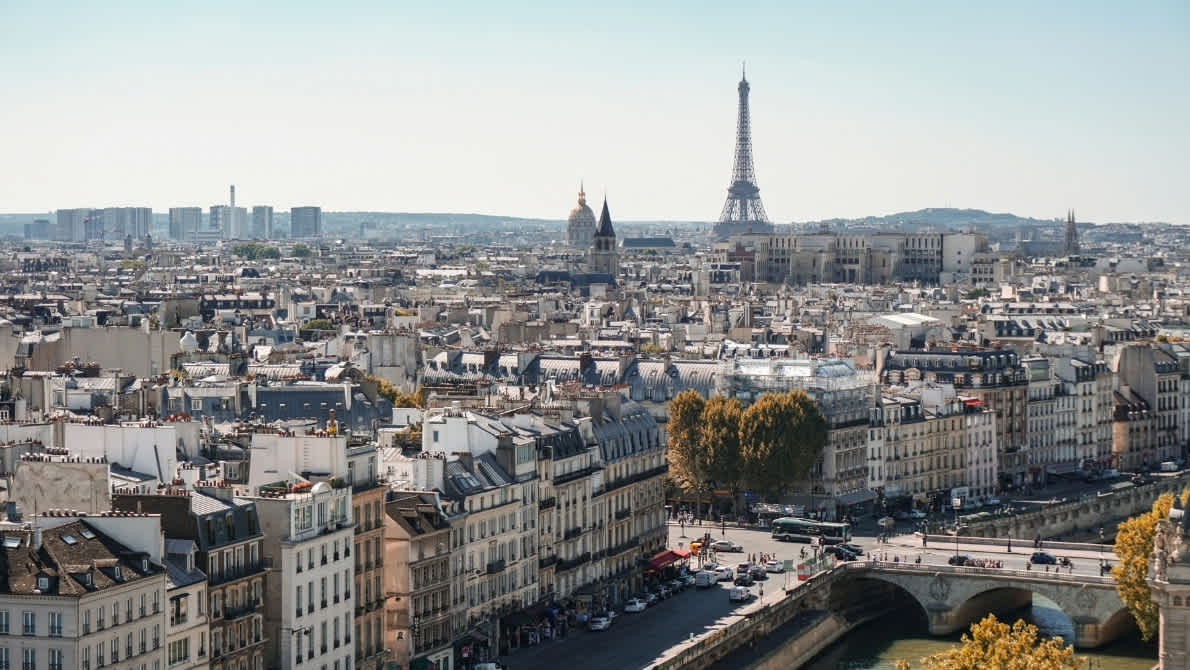
“Paris is not a city; it's a world,” as King Francis I of France supposedly said. Today, with its 20 arrondissements, or districts, Paris does indeed feel like a world in miniature, with each arrondissement having its own particular atmosphere and character. For travellers, this makes it rather difficult to work out where to stay in Paris first time around.
Yet wherever you choose, there’s no reason to feel tied down, for getting around Paris is easy whether by Metro or ride-share. And with a relatively compact centre, Paris is made for exploring on foot—the art of the flâneur was born here, after all—and wandering the city’s streets is as essential to the Parisian experience as a trip up the Eiffel Tower or a pastis at a sidewalk café.
Still, choosing the right neighbourhood can transform a great trip into an unforgettable one. Whether your preference is for nightlife, sightseeing, food or shopping—whether you’re travelling alone, as a couple, or with family—we’ve selected some of the best Parisian neighbourhoods to suit every type of stay.
Jump to:
Where to Stay in Paris as a Tourist
Champs-Élysées (8th Arrondissement)
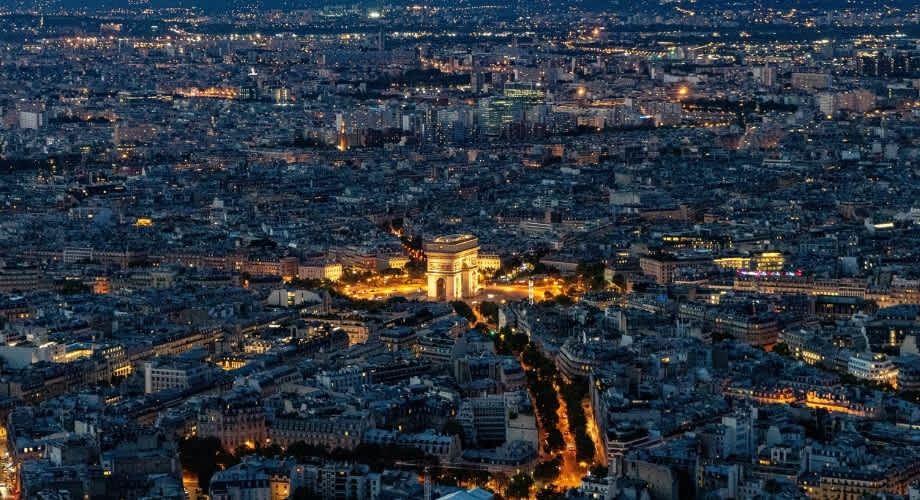
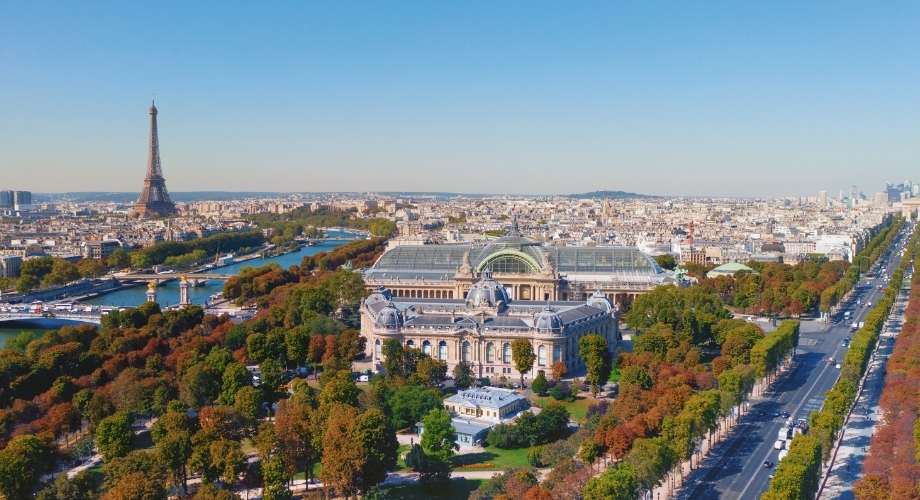
The 8th arrondissement is centred on Paris’s most illustrious boulevard, the Champs-Élysées—a 1.9 kilometre (1.2 mile) stretch of glitz and glamour. It forms a central part of the Axe historique, the historical west-east axis that links several of Paris’s most iconic landmarks. Beginning at the Place de la Concorde – with its famous Egyptian obelisk – it unfurls like a giant red carpet all the way to the Arc de Triomphe, Napoleon’s towering tribute to his victory at Austerlitz in 1805.
The Champs-Élysées is Paris at its most imposing, defined by its stately Haussmannian façades (after Georges-Eugène Haussmann, the 19th-century prefect who reshaped much of the city). As such, it is home to many of the city’s most prestigious hotels, including timeless institutions such as Le Bristol Paris and Hôtel de la Maison Champs-Élysées. It is also the city’s prime address for shopping, with the Triangle d’Or (“Golden Triangle”) widely regarded as one of the world’s great luxury retail districts, home to flagship boutiques and designer fashion houses.
Tired of all the haute couture? Try some haute cuisine instead. Here you’ll find a host of brassy cafés and grand brasseries, including celebrated venues such as L’Avenue and Fouquet’s, the latter instantly recognisable by its famous red awnings spilling across the corner of Avenue des Champs-Élysées and Avenue George V.
Beyond shopping and dining, the area also offers cultural highlights, including the Petit Palais—built for the 1900 Exposition Universelle and now home to the Museum of Fine Arts—and the equally impressive Grand Palais, with its vast roof of steel and glass.
Note: The Champs-Élysées is particularly striking in autumn, when the chestnut trees lining the avenue turn gold—as if it couldn’t get any glitzier.
NH Collection Paris Ponthieu Champs-Élysées, which underwent a full renovation to refresh its 87 tastefully decorated guest rooms, offers a more understated alternative to the district's grandeur. With a Metro station just a short walk away, it serves as a comfortable and practical base for exploring both the neighbourhood and the city.
Gare de l’Est (10th Arrondissement)
In contrast to the polish and prestige of the 8th, the 10th has a more grounded, work-a-day air—perfect for those eager to soak up the “real Paris”.
It is centred around two major transport hubs, Gare de l'Est and Gare du Nord, with the former serving eastern France as well as Luxembourg and Germany, and the latter acting as the gateway for Eurostar services to London and high-speed trains to northern Europe. For that reason, the 10th makes an especially practical base for rail travellers arriving in, or passing through, the city, and for those deciding where to stay in Paris first time who value easy connections.
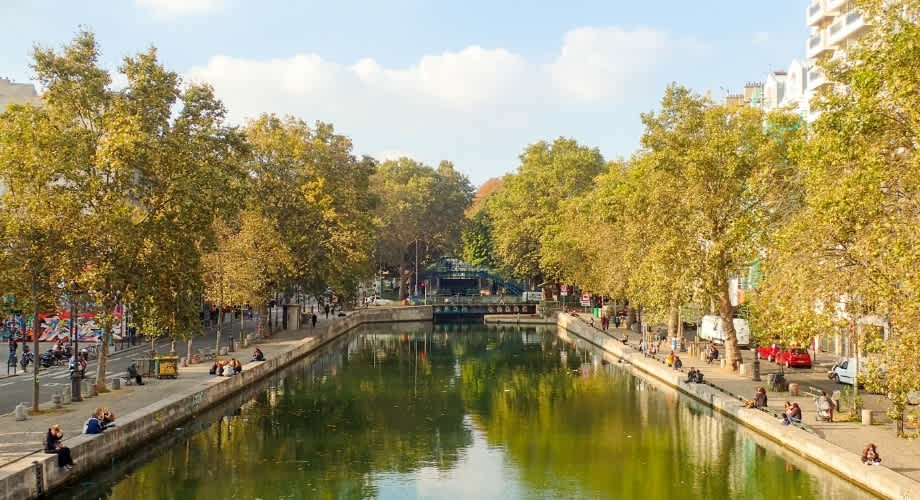
Much of life here evolves around the Canal Saint-Martin, a 19th-century engineering project commissioned under Napoleon I to improve the city’s water supply. With its leafy towpaths, it is one of Paris’s most pleasant walks – or cycles – while in warmer months its banks fill with young Parisians picnicking, drinking wine and playing music late into the evening. This youthful energy carries through into the surrounding streets, which are dotted with wine bars, vintage shops and independent boutiques.
The 10th is also one of Paris’s more multicultural neighbourhoods, a fact reflected in the variety of food on offer. The area around Rue du Faubourg Saint-Denis and Rue du Faubourg Saint-Martin is is known for its North and West African cooking—a literal and figurative melting pot—while Passage Brady, sometimes called “Little India”, is the place to go for a South Asian curry.
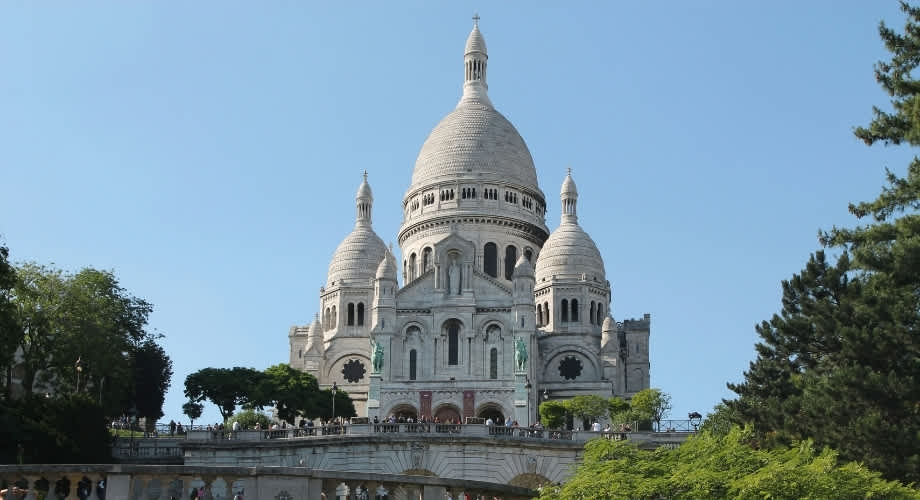
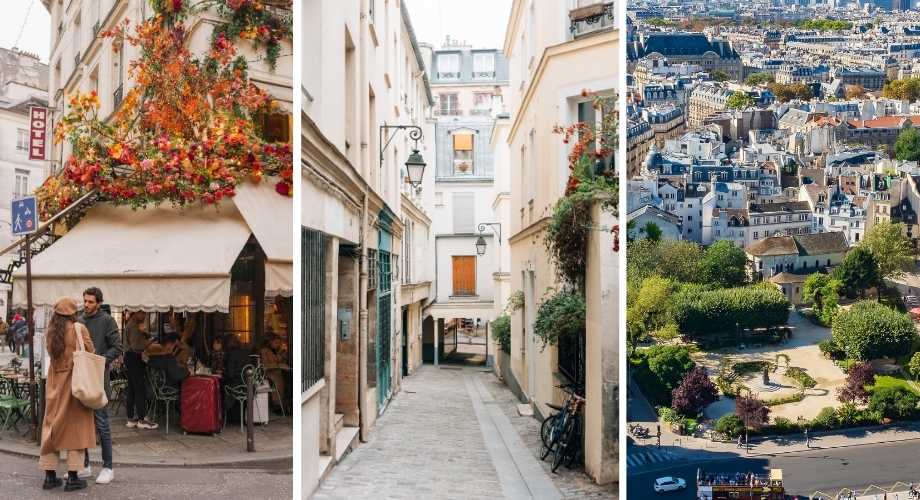
What the 10th lacks in major landmarks it makes up for in location. The arrondissement brushes up against Montmartre to the north, the fabled heart of pre-war Bohemian life and home to the stunning Basilique du Sacré-Cœur, while to the south lies the trendy Le Marais district, known for its nightlife and narrow streets that pre-date Haussmann’s 19th-century redesign.
NH Gare de l’Est sits directly opposite the station, making it particularly convenient for travellers arriving late or departing early. Following a full renovation, with 207 fully soundproofed rooms, you can be sure of a comfortable night’s sleep despite the hotel’s location in the heart of Paris’s transportation network.
Latin Quarter & Saint-Germain-des-Prés (5th & 6th Arrondissements)
Together, the 5th and 6th form the heart of the Left Bank. The 5th—the Latin Quarter—is the oldest continuously inhabited part of Paris, and Roman and Medieval remains are still visible here, including the ancient Arènes de Lutèce amphitheatre.
Home to the Sorbonne University, France’s oldest university, the 5th has long been shaped by student life, evident in its numerous cafés and bookshops—including the legendary Shakespeare and Company, in operation since 1951.
The Latin Quarter is overlooked by Notre-Dame de Paris, which sits just outside it on the Île de la Cité and reopened in December 2024 following extensive restoration after the 2019 fire.
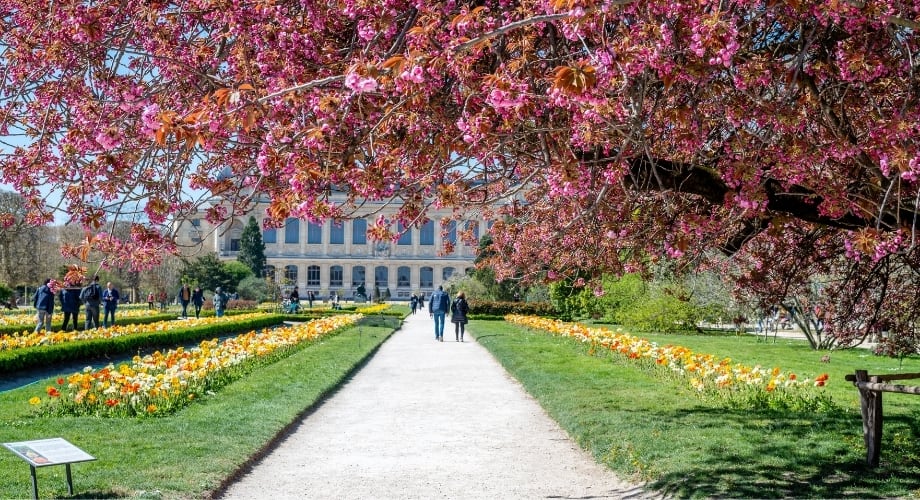
Further along the Seine, the Jardin des Plantes is one of the city’s finest green spaces and home to the National Museum of Natural History, making it an excellent spot for families. Away from the river, the massive neoclassical pile that is the Panthéon embodies the district’s intellectual heritage, being the final resting place of many of France’s greatest minds, including Voltaire, Victor Hugo and Alexandre Dumas.
Crossing Boulevard Saint-Michel takes you to the 6th, aka Saint-Germain-des-Prés. In the early 20th century, the area became the favourite haunt of writers and philosophers, especially among the Anglophone crowd, who drank, argued and occasionally wrote in legendary cafés such as Les Deux Magots and Café de Flore, both still in operation today.
As for must-see sights, check out the Musée de Cluny and the grand Saint-Sulpice Church, known for its vast interior and murals by Eugène Delacroix.
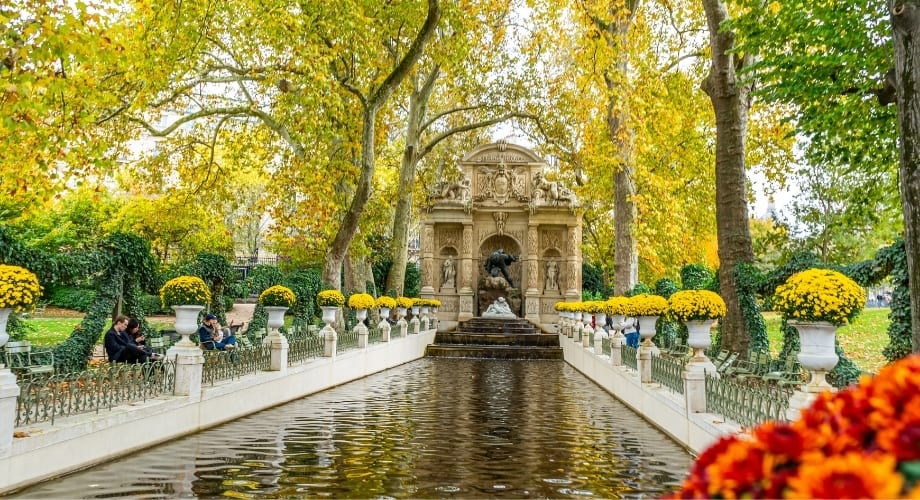
Like the 5th, the 6th also has its famous green space: the Luxembourg Gardens, which spread out around the Luxembourg Palace and are full of leafy corners—perfect for an afternoon spent with a book.
Opera District (9th Arrondissement)
Known for its stately avenues and ornate arcades, the 9th arrondissement continues the 8th’s upmarket character, albeit with a little less pomp. It also feels more neighbourly in places, making it a good fit for those deciding where to stay in Paris first time, as well as for families hoping to see a bit of everything during their stay.
To the south, the Grands Boulevards comprise a chain of several interconnected streets filled with concert venues, old theatres, and covered passageways. To the north, where the 9th meets Montmartre, you’ll find a very different character: the once-notorious nightlife quarter of Pigalle, made famous by the Moulin Rouge cabaret.
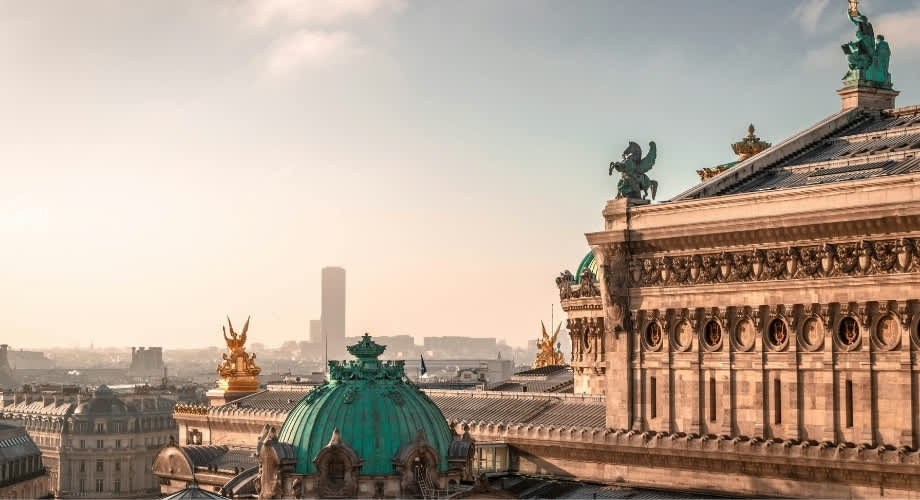
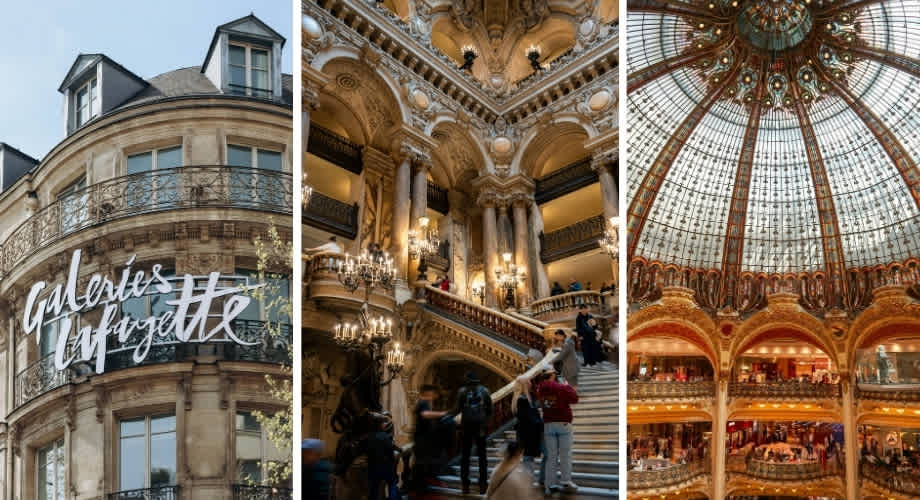
The district’s most notable landmark is, of course, the Opera Garnier (Palais Garnier), completed in 1875, for which the district is named. Even if opera or ballet is not your thing, it is worth visiting for its sweeping marble staircase and celebrated ceiling painted by Marc Chagall.
Such architectural splendours continue in the grand department stores of Galeries Lafayette Haussmann and Printemps Haussmann, filled with soaring glass domes and gilded interiors—a veritable dreamland of fin-de-siècle opulence.
Dining meanwhile reflects the district’s dual character: classic Parisian institutions such as Le Grand Café Capucines andBrasserie Mollard offer seafood platters in mirrored Belle Époque settings, while more contemporary bistros and wine bars appear as you move further north.
Tucked away on a quieter street, the four-star NH Opéra Faubourg occupies a recently renovated Haussmann-style building. It sits within strolling distance of Montmartre, the Opéra Garnier and Galeries Lafayette, placing you firmly in the centre of the action. The Louvre and the Tuileries Garden are also easily walkable.
Tips for First-Time Visitors to Paris
First-time visitors are advised to stay as centrally as possible. While cheaper accommodation can be found further out, the time spent commuting will eat into your leisure time. It’s also handy to be able to retire to your hotel after sightseeing excursions before heading out for dinner.
Paris’s metro system is efficient and extensive, but the city is best covered on foot. The centre is reasonably compact and staying centrally means many of the key sites are within walking distance. Getting to know the streets and how one arrondissement flows into the next is to briefly inhabit the city.
It’s also worth planning your days by area, to avoid unnecessary backtracking. But leave space in your itinerary for doing nothing. A couple of hours at a pavement café can be just as rewarding as traversing the city’s countless museums or ticking off the main attractions.