Jump to
- The ROI of R&R
- Travel Buddies: Connection with Family & Friends
- Recharge & Restorative Holidays
- Local Immersion
- Sustainability: A Journey Shaped by Values
- Conclusion: Connection is the New Currency
In 2026, travel will be defined by a search for deeper connection, with travellers meeting that longing with renewed confidence to explore — a key insight highlighted in the Travel Trends in 2026 by Minor Hotels Report.
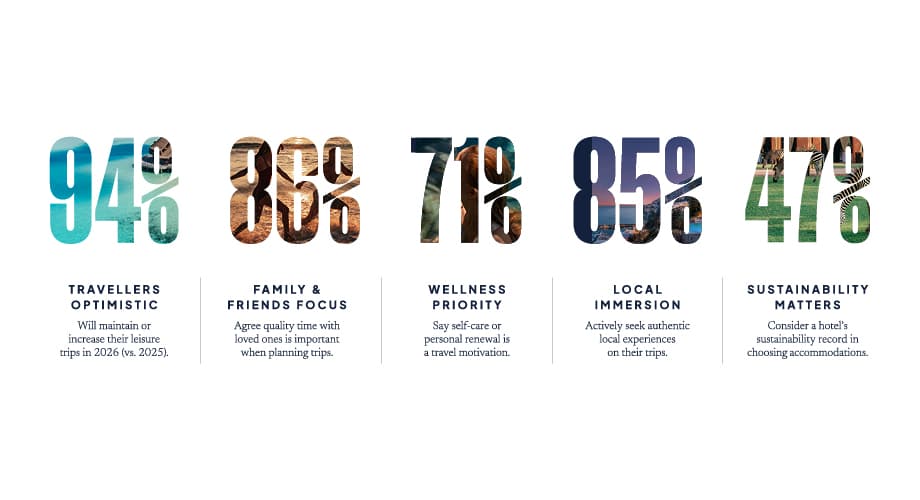
94% percent of Minor Hotels travel behaviour survey respondents expect to travel as much or more in the coming year, with one-third anticipating more trips than in 2025.
Yet beneath the enthusiasm lies a shift: travellers are rethinking how they move through the world, seeking multidimensional experiences that resonate emotionally, relationally and even spiritually, ideally within a single journey. As priorities evolve and expectations rise, hotels must adapt to meet the moment.
1. The ROI of R&R
Travellers are shifting their focus from the quantity of trips to the quality of experience, with hotels that offer deeper, personal value leading the way.
In 2026, travel is increasingly being seen as a necessity. And as an essential, it’s being prioritised, economic rain or shine. According to the World Travel & Tourism Council (WTTC), the sector’s contribution to global GDP is projected to grow by 4.3% in 2026, outpacing overall economic expansion. The desire to explore beyond one’s borders remains strong: international tourist arrivals rose by 5% in the first half of 2025 compared to the previous year. Meanwhile, the UN Tourism Confidence Index shows a notable uptick in sentiment heading into the end of 2025.
Travellers may be feeling optimistic, but they’re still keeping a close eye on their wallets, affordability remains the top consideration for 53% of respondents.
This behaviour aligns with the travel trends in 2026, where many travellers are redefining value through experience rather than cost, with 19% actively seeking more exclusive, one‑of‑a‑kind journeys. For such holidaymakers, paying extra for a truly unique experience isn’t seen as indulgence but rather as investment in memory, meaning and personal joy.
Cost, however, is less of a barrier among luxury travellers, where only 48% cite it as their primary concern. For these guests, other factors carry nearly equal weight: seasonality (43%), securing time off work (41%) and ease of travel (39%) all shape decision-making.
2. Travel Buddies: Connection with Family & Friends
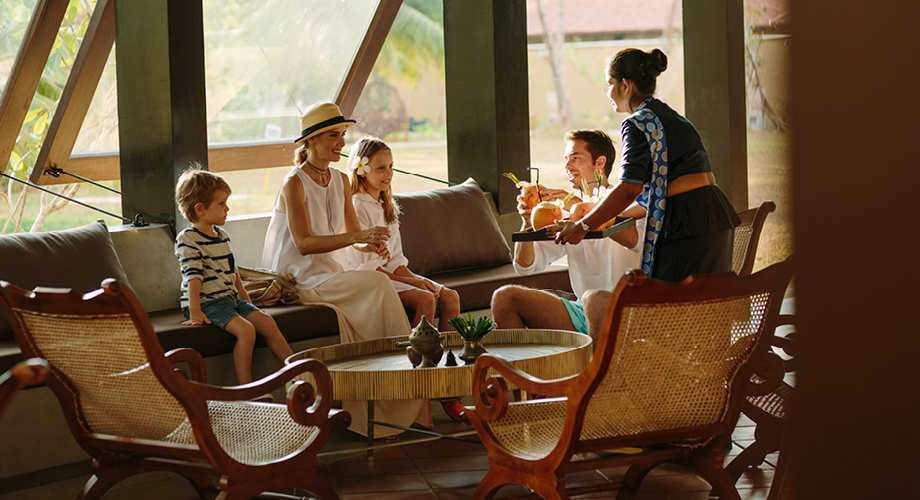
Travel is a reunion: multi-gen trips, shared adventures and private stays. Another travel trend in 2026 is confirmed in the Minor Hotels survey: social connection is still king, even as #solotravel continues its steady rise. In an age of digital noise, the fundamental human need for quality, uninterrupted time with loved ones has become a primary driver for booking a holiday.
Nearly all respondents plan to travel with companions. A significant 86% agree that spending quality time with friends or family is a key priority when planning a leisure trip.
The most popular travel companions? Partners (66%) followed by immediate family (46%) and friends (32%).
What unites these trips is the power of shared memory-making. The most meaningful moments are often the simplest: dining together (67%) and unwinding side by side (64%) and immersive cultural activities (55%).
Anantara Hotels & Resorts ’ signature Designer Dining experience has seen this trend flourish, with demand growing for unique settings, from a sandbar in the Andaman to a sea of tulips in Amsterdam.
For luxury travellers, adventure also ranks highly (54%), with Elewana Collection’s safari holidays in Africa, hot air ballooning in Cambodia and shipwreck diving in the Indian Ocean all gaining traction.
Circle of Trust, Checked In
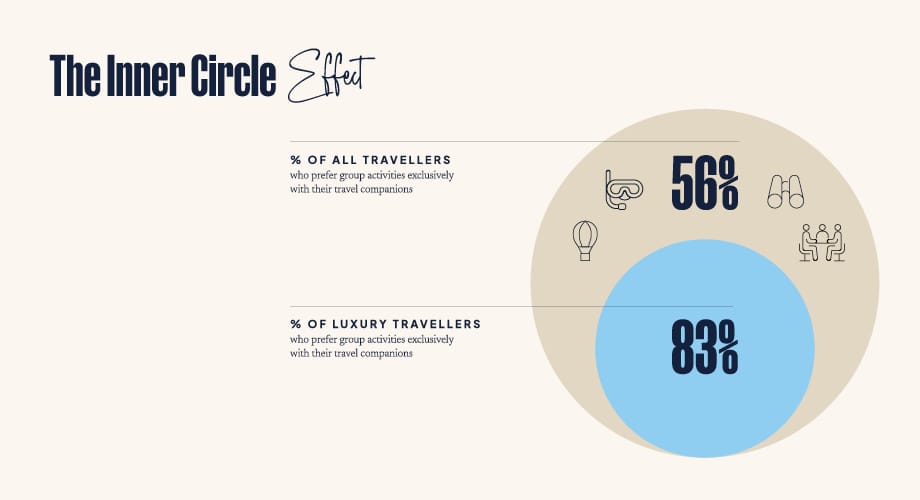
When travelling with others, there’s a clear preference for keeping things close-knit. Over half of all respondents (56%) prefer group activities exclusively with their travel companions.
Among luxury travellers, that number rises sharply to 83%, suggesting a strong desire to maintain a familiar, intimate circle. Rather than a sign of exclusivity for its own sake, this trend points to something deeper: a growing impulse to use travel as a protected bubble for reconnection, an opportunity to strengthen existing relationships away from everyday distractions.
3. Recharge & Restorative Holidays
Hitting the Digital Pause
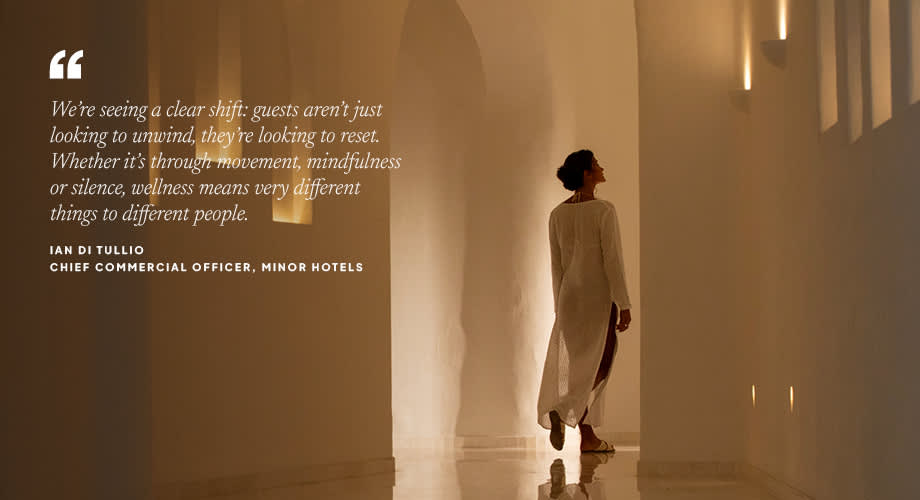
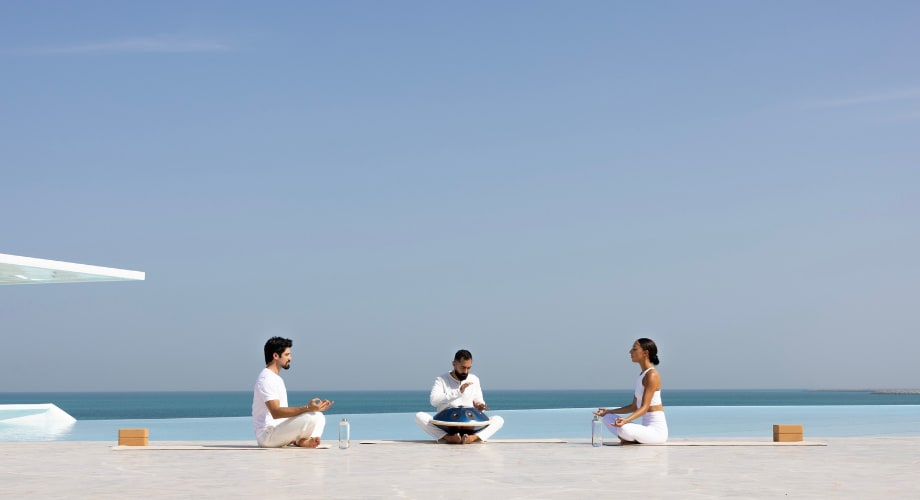
With all the buzz around AI and tech, it’s unsurprising how many travellers just want to unplug,a travel concept that continues to gain momentum. In fact, 71% agree that taking a break from technology, social media or work during their travel is important for their personal wellbeing. In 2026, nearly half of all travellers (44%) plan to incorporate more wellness or mindfulness elements into their trips, with the trend especially strong among those already engaged in wellness practices (73%).
Fitness-based activities are key to a restorative holiday for 49% of travellers. This emphasis reflects a broader shift in the global wellness market, projected to reach USD 2 trillion by 2025, according to McKinsey’s Future of Wellness Trends report, driven largely by younger generations seeking structured, professional support for physical and mental recovery. Anantara’s global partnership with Technogym responds to this demand with an exclusive in-room wellness video series, delivering expert-led fitness and mindfulness experiences tailored specifically for hotel environments.
But for most travellers, spa services remain the top choice for relaxation (75%). Alongside classic massages and facials, guests are increasingly drawn to indigenous wellness, from Traditional Thai Medicine in Phuket to Ayurvedic treatments in Sri Lanka.
Time for Me, Too
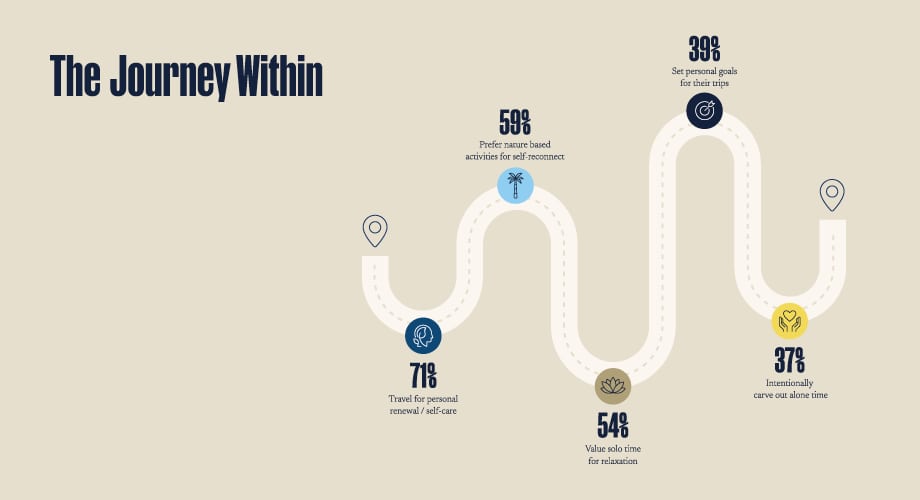
More than ever, holidays are seen as an essential time for introspection, with a strong majority of travellers (71%) stating that personal renewal or self-care is an important reason for their travel. Today, the most effective activities for self-reconnection are overwhelmingly tied to nature (59%), whether riding camels in the Empty Quarter outside Abu Dhabi or island-hopping in the Andaman, with solo time for relaxation coming in a close second at 54% .
The key insight lies in the deliberate balance travellers strike between shared time and solitude. Over a third of respondents (37%) consistently carve out time alone during trips, even when travelling with others.
4. Local Immersion
Today’s traveller is willing to go beyond the tourist trail for a deeper connection to local culture and community. That might mean splurging on a bespoke suite in Milan to sample a bit of Italian sprezzatura, or getting gloriously lost in the handwritten menu of a no-frills tapas bar in Madrid, while trying to decode the city’s 9:00 pm dinner ritual.
Most travellers consider experiencing such local immersion important when choosing a destination (83%) and 85% actively seek out local experiences during their trips. And while cultural experiences such as almsgiving with monks at Avani+ Luang Prabang and Boduberu Drumming Circles at Avani+ Fares Maldives are popular, fostering this connection is, overwhelmingly, local cuisine.
Cited by 85% of all travellers, food is the primary gateway to culture. Exploring historic architecture (71%) and enjoying nature (65%) follow as key cultural touchpoints. Among those who actively seek local experiences, the emotional pull of dishes like phad krapow on a Bangkok street corner or camel milk chocolate in a Dubai mall pushes food’s cultural relevance even higher, reaching 91%.
The Culinary Compass: Guided by Taste
In 2026, authentic culinary experiences are no longer ‘nice-to-haves’ but key drivers of destination choice. Research by Oxford Economics supports this, indicating that tourists are willing to pay significantly more, up to USD 250 extra per person per day, for high-quality food and beverage offerings.
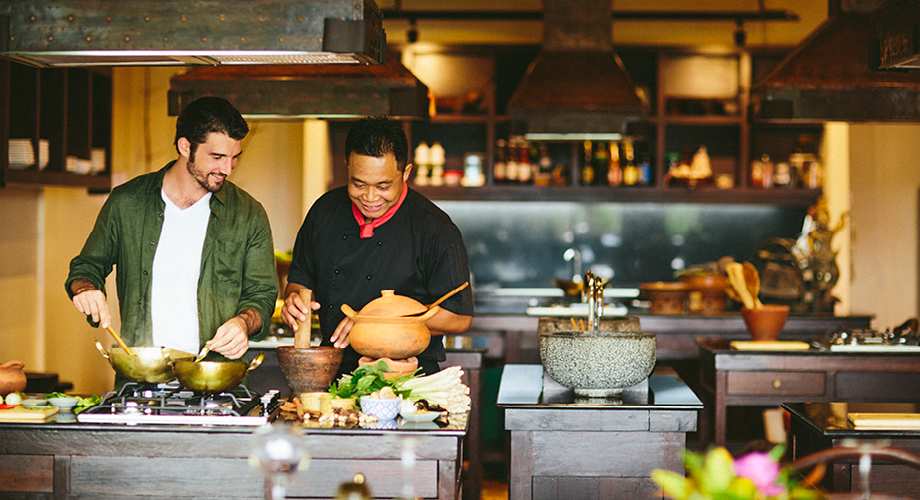
This bodes well for properties with Michelin-starred restaurants such as NH Collection Madrid Eurobuilding and Anantara Palais Hansen Vienna, home to DiverXO and EDVARD, respectively. Food-motivated holidaymakers approach local gastronomy in vastly different ways. Some roll up their sleeves to master local cuisine at Anantara’s Spice Spoons, whether held in a beachside kitchen in the Maldives or aboard a pontoon boat drifting down the river in Chiang Mai.
Others seek out heritage spaces where delicious aromas waft through storied walls, like Wintergarden at historic Anantara Grand Hotel Krasnapolsky Amsterdam or the iconic New York Café at Anantara New York Palace Budapest.
5. Sustainability: A Journey Shaped by Values
Another travel trend during 2026 will be the rise of the eco‑conscious traveller, prompting hospitality players to up their game.
With the rise of the eco-conscious traveller, hospitality players have upped their game. As a result, today’s intentional traveller scrutinises a destination’s sustainability credentials with more insight than ever, expecting far more than just LED lightbulbs.
Increasingly, the choice of accommodation is shaped by sustainability considerations. Nearly half of all respondents (47%) report that a hotel’s sustainability record or proposition influences their choice of where to stay. Crucially, engagement with environmental and social initiatives deepens the guest’s relationship with the place. More than half of travellers agree that environmental, cultural and social initiatives enhance their connection to the destination, whether at city hotels (54%) or destination resorts (53%).
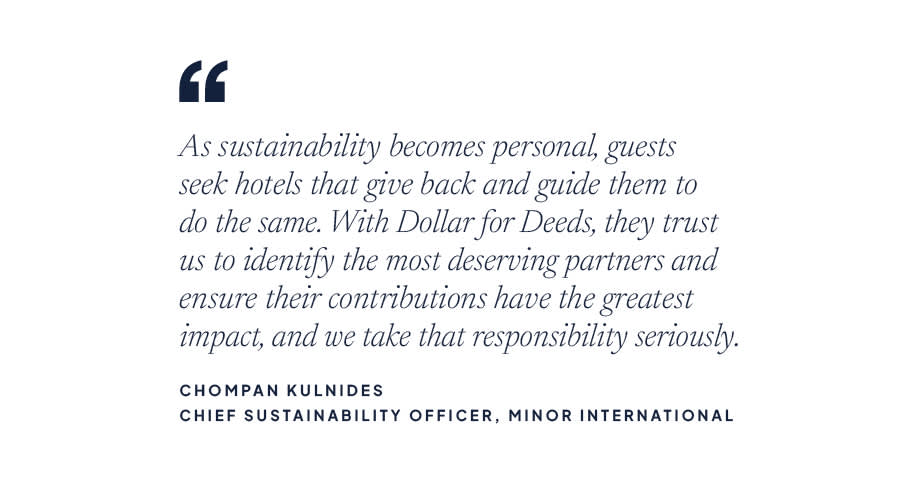
This ethically minded energy is well matched by Minor Hotels’ ‘Dollar for Deeds’ programme, a guest-led initiative where travellers can opt to donate one dollar per night of their stay, with the hotel matching the contribution.
In Europe, NH and NH Collection’s ‘Hotels with a Heart’ programme offers pro-bono accommodation to families of sick children and adolescents, ensuring they can stay close to their loved ones throughout the hospitalisation process. And yet, good intentions alone aren’t enough. According to Mintel’s Global Outlook on Sustainability 2024–2025, while 61% of travellers want to know more about sustainable travel, only 46% feel informed.
Conclusion: Connection is the New Currency
The Minor Hotels Travel Trends in 2026 is clear:
- Leisure travellers are prioritising deeper connection, a defining travel concept in 2026. With the pressure to tick off sights fading, they’re seeking experiences that move them or even change them. They want to feel part of something bigger: family, community, purpose. As a result, value creation is shifting from memory-making to meaning-seeking.
- This shift brings a new expectation. Hotels are increasingly being judged by how well their offering aligns with the evolving values of their guests.
- For hospitality players, this demands a new kind of emotional architecture. Properties that integrate purpose-driven programming, local engagement and wellness-led design will be best positioned to build loyalty, inspire repeat visits and command premium pricing.
- The evolution of hospitality continues: from service providers, to experience curators, to connection builders. For Minor Hotels, this transformation isn’t a trend but a commitment. We listen, we learn and we evolve alongside our guests.
Note:
For the full findings and detailed analysis, read the complete report: https://media.minorhotels.com/en-GLO/258456-minor-hotels-travel-trends-report-2026/
The Minor Hotels Travel Trends 2026 report presents findings from a self-administered survey conducted between 1 and 20 October 2025. The survey includes responses from 906 adults aged 18 and above who have opted in to receive Minor Hotels newsletters. Within this sample, ‘luxury travellers’ (n=386) are defined as those who have stayed at least once in 2025 at one of Minor Hotels’ luxury brands: Anantara Hotels & Resorts, Elewana Collection, or Tivoli Hotels & Resort.