Help
Help
Minor Pro > Blog > Event Planning Tips & Guides > What are Experiential Events: Building Trust Through Connections
What are Experiential Events: Building Trust Through Connections
Minor Hotels Jul 17, 2025
Minor Hotels Jul 17, 2025
In a world that is overwhelmed by boring webinars, generic presentations, and endless email campaigns, one approach is breaking through the noise: the experiential events. These are not just your standard conferences or trade shows, but rather a form to use immersive, emotional, and unforgettable encounters happening between a brand and its audience.
In a B2B context, experiential events create an emotional connection that traditional marketing simply cannot achieve. It is not just about the products or the ideas, but more about bringing them to life, which allows future clients and actual ones to experience first-hand what your brand is all about.
From interactive product showcases to a sensory storytelling, these events let the participants be engaged in your brand’s universe. They trigger emotions, build memories, and create stronger relationships. There are many ways to do them: it could be a live demo with virtual reality, a unique pop-up experience inside a hotel rooftop, or a fully themed activation. They will for sure leave an everlasting mark that will stick with your audience, tangling their senses for a better brand perception.
In this article, we will explain what that is exactly “experiential marketing event” everyone is talking about, and why it is becoming essential for B2B advertising. We will go together through the benefits they offer, and how to design one from the ground up. Furthermore, we will showcase how spaces like Minor Hotels provide the perfect canvas for brands to really unleash their creativity to deliver powerful experiences.
Nowadays it is not only about what your brand says, but also about how your audience feels about your brand.

Experiential events are more than a meeting, they are a live, branded experience that acts as an invitation for attendees not just to “be present”, but to actively engage. These events are designed to immerse the audience in your brand’s world, allowing them to see, hear, touch, and mostly feel what your company is all about. They don’t just convey a message, but rather, they create a memory.
So, what is experiential marketing? What makes an event truly special? The answer is its ability to cut across the line between brand and audience. The participants are not observers, they are part of the story. Guests will not only stand, passively listening to a speaker or sitting flipping through a brochure. They will be interacting with a live demo, participating in a hands-on workshop, or navigating through a space that feels more like a movie instead of just another standard conference venue.
That is the key to an experiential event, its power to convey emotions. The environment is specially designed to awaken something in the guests, with the lighting and music as well as with the narrative arc that will act as a guide for the attendees through the experience. Also, technology often plays a key role, using tools like virtual or augmented reality to deepen the engagement or personalize content. But at the core of it all is human connection: the ability to create a shared moment that sticks long after the event is over.
In B2B marketing, this shift is particularly significant. Selling your business to others requires more than features and pricing sheets. It needs trust, a deep understanding of how emotions work. Unlike traditional conferences, experiential events allow complex ideas to be communicated in a deeper way, turning intangible value propositions into tangible experiences.
So, it all comes down to one thing: the intention. While traditional events aim to inform, experiential events aim to transform and connect.
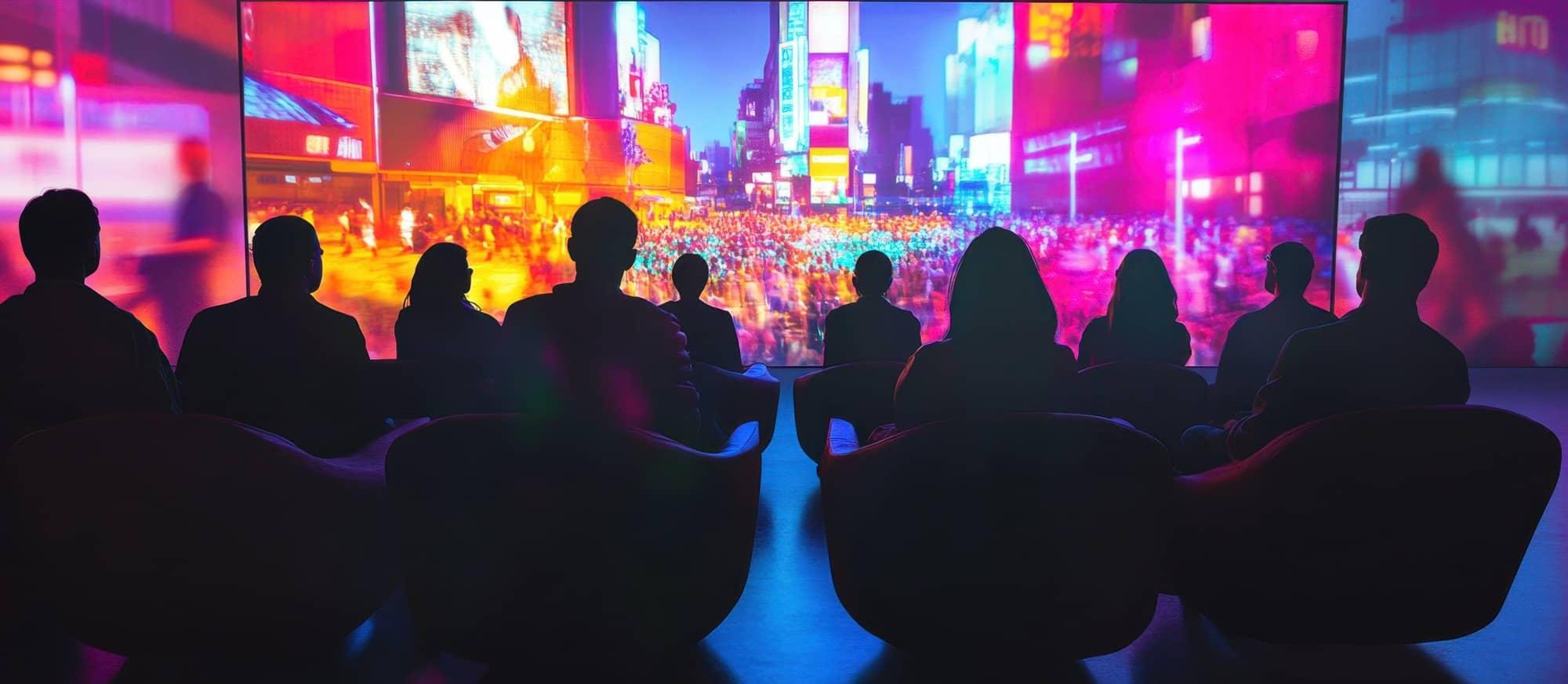
In these days, buyers are swamped with options, and experiential marketing event is rising as a powerful differentiator, especially in the B2B world. The true value of experiential events is not just to put on a great spectacle, but it must be their ability to engage the audience to build stronger relationships and creating brand visibility through the emotional channels.
One of the most main assets of experiential marketing is that, if done right, it can build lasting connections with customers. When attendees are part of something meaningful or surprising, they don’t just remember the event, but also the brand behind it.
For B2B brands, this is more important than ever. Customers tend to take more time to commit to buying a service, especially in a saturated market and high stakes transitions. That is why, we need more than a traditional sales pitch. They need authenticity, values, feeling like they are part of the business they are signing deals with. With experiential marketing events, your brand can offer an immersive experience to communicate complex proposals in a more accessible and fun way.
In fact, experiential events are a clever way to stand out among the competitors. The brand becoming a story and a thoughtfully crafted experience is more likely, not only to stay engraved in the attendees’ minds, but also it will become a story that they will tell for weeks or months afterwards, amplifying your presence by word-of-mouth. Paired with real-time buzz on social media, your brand will increase its visibility and its reach. No negative effects here!
Also, the emotional impact has also a practical side. With the help of technology, brands can track its audience’s engagement and recollect feedback to get insights into behaviour. This data can later be turned into strategies, with redefined messages and tangible results.
All of this has a clear outcome: loyalty. Clients will trust your brand and feel like they are part of it, not only as a provider or a customer, but like a partner. And that will make them turn to you every time they need your services, building long-term relationships.

The perfect experiential event is not only about sparkly ideas and innovative technologies, but also about crafting intentional moments, bringing up unique emotions and unforgettable memories. The most impactful events do not just impress the attendees, they make them feel something real.
That is why your purpose must be clear from the moment you start organizing it. Every choice you make has to be relevant for your storyline, and connected to that goal, while also speaking directly to your audience’s world.
And, of course, every story needs the right stage. At Minor Hotels, we like to think that we are not just the perfect partner, we are part of you. With over 560 properties across Asia, the Middle East, Africa, America and Europe, we offer an extraordinary range of locations, from urban energy to beachfront calm, from historic charm to local nature. We have everything you need, and we can assist you to choose a setting that amplifies your story.
One of the greatest examples of experiential marketing at Minor hotels are those being held at our nhow hotels brand. The campaign “dance nhow, change now!” by nhow is a vibrant out of the box experience that has transformed the hotels into hubs of movement, rhythm, and creativity. Here, guests do not only do the check-in for a fantastic stay, but they also enter a world of music and dance. With immersive experiences like interactive dance floors, choreographed movements and playlist, all our community is invited to dance in our lobbies to celebrate life. This is not just a reflection of nhow’s personality, which conveys a bold and fun vibe, but it is also a perfect example on how experiential marketing is meant to be lived. Our guests will for sure remember the emotions they felt and the platform of expression we allowed them to experience. So, whether you are preparing a B2B retreat or a creative brand activation, the nhow case shows how powerful it is when hotels and experiential marketing align.
We understand what experiential marketing events are, and we are specialised in helping brands bring their vision to life, with flexible and creative solutions. We offer customised catering, immersive local experiences… you name it, we have it, while wrapped in world-class hospitality know-how. Our commitment to service and to creating unique experiences is backed by decades of inspiring and supporting brands to make their dreams come true. With your brand and our expertise, we can create great events and unforgettable moments.
In this technological world, attention becomes the rarest resource. To successfully grab your clients’ attention, you must create emotional, meaningful experiences, as this has been proved to be the most effective way for brands to stay on the top-of-mind of customers and clients and stay relevant. Experiential events are a perfect way to achieve this. They allow your business to go beyond a simple, boring messaging right deep into memory, turning passive audiences into active participants, and thus, customers into loyal advocates.
For B2B companies, the stakes are high and the competition is fierce! A thoughtfully planned event can help build visibility, trust, and connection in unique ways, like no digital campaign or PowerPoint ever could. It transforms a traditional sales pitch into a shared moment, a product demo into an emotional journey, and a brand into a story that is worth telling. But, no worries, you are not alone: Minor Hotels will be right beside you, to enhance this experience for your customers, while making it easier for you.
This power to connect is not just a lucky guess, it is the result of a thoughtful design, strategic precision, and counting on the right partners. At Minor Hotels, we provide immersive environments and help you create tailored events, so you know that your brand’s story is going to be told and remembered in a way that’s both compelling and emotional.
Because in the end, people don’t remember logos or pitches, they remember how you made them feel. And when your brand becomes a feeling, everything changes.
Experiential events are immersive, emotional, and unforgettable meetings between a brand and its audience that go beyond traditional marketing formats. They aim to create a deep emotional connection by allowing participants to engage with the brand’s universe.
To create an experiential event, you need a clear purpose from the start and to design every element to support a storyline that resonates with your audience. It involves crafting intentional moments using technology, sensory elements and emotional storytelling. Partnering with venues like Minor Hotels can enhance the experience with tailored services and immersive environments.
Experiential events are important to make your brand stand out from others by creating emotional bonds, making complex ideas more tangible, and building long-term relationships. Especially in B2B, they help build trust, differentiate brands, and drive loyalty by turning attendees into engaged advocates who remember and talk about the brand long after the event.
Traditional events focus on delivering information, often passively through presentations or brochures. On the other hand, experiential events aim to transform and connect. They offer emotional, interactive, and immersive experiences to the attendees, that create lasting memories and stronger brand associations.